Hitting The Mark
Conversations with founders about the intersection of brand clarity and startup success.






EP131 – [untitled]: José Chayet & Dan Lilienthal, Co-Founders
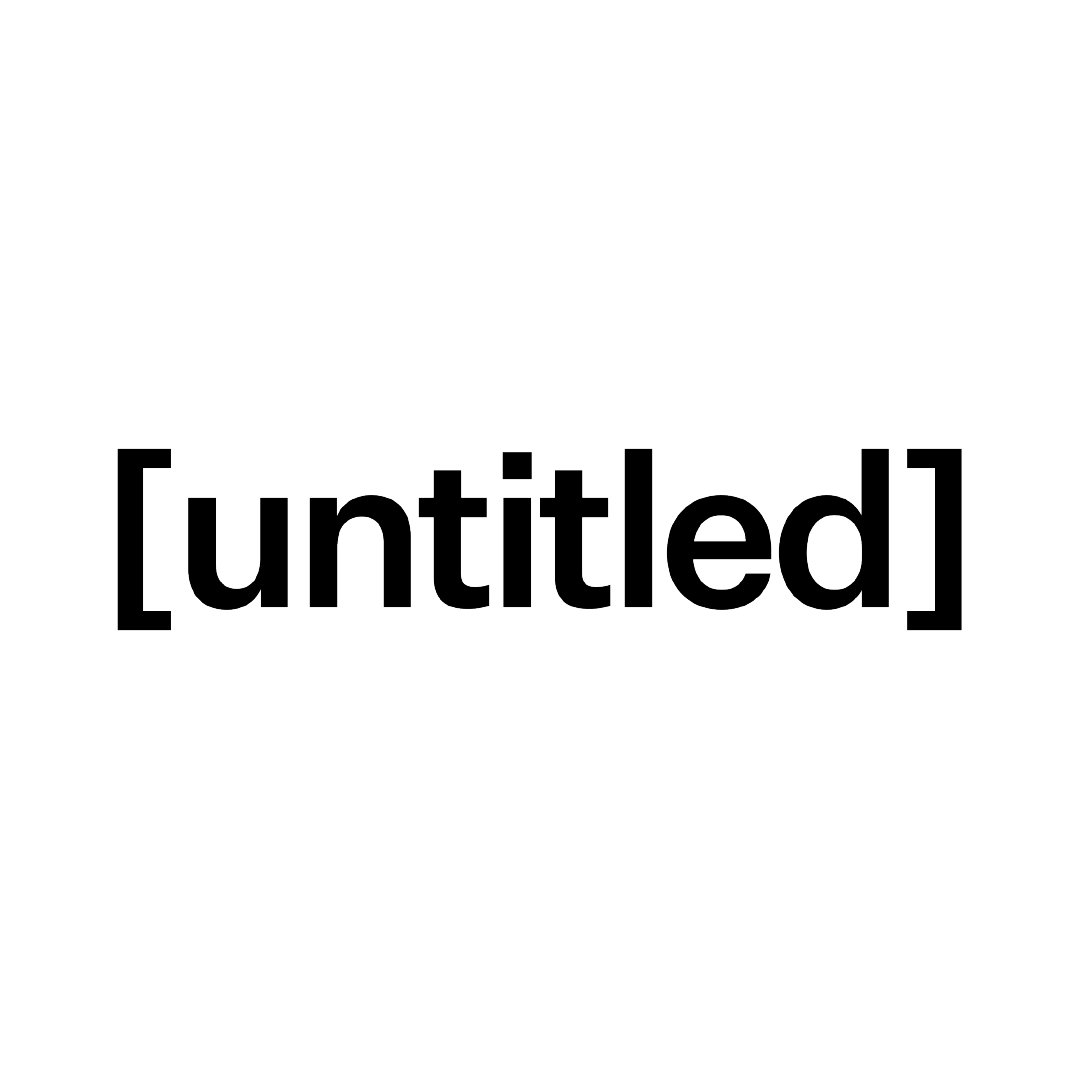
Dan Lilienthal and Jose Chayet co-founded [untitled], a sacred place for work-in-progress music used by hundreds of thousands of artists and producers, including Justin Bieber, Hayley Williams, and Geese. The brand was recently awarded one of Fast Company’s 10 most innovative music companies of 2026.
In our conversation, we discuss the founders’ background in art history, their goal of allowing artists to stay in a flow state, why they started a series of text interviews on Instagram, and how they see branding as a vocabulary. A very creative conversation, one you should not miss.
Fabian Geyrhalter:
Welcome to the show, Dan and José.
José Chayet:
Thank you so much for having us. We’re honored to be here.
Fabian Geyrhalter:
It’s really, really great to have you here. My frequent listeners know that I’m a big music enthusiast. I run a startup at Chase Into the Music Space where we create innovative design driven record storage. It’s called Toneoptic. Oh, cool. We might have to hook you up, but what they might not know is that I also release music under the moniker Happiness One. And if only two of you out there right now listening are going to listen to Happiness One today, we will immediately double our monthly listener account. Okay. Enough of this blatant self promotion. Then in José, you co-founded [untitled], which is in brackets and that’s very important.
José Chayet:
Thank you for saying That.
Fabian Geyrhalter:
Yeah, of course. Of course. From a brand person, that’s what you expect. It’s a project that is a little bit more successful than my musical endeavor. You recently were awarded one of Fast Company’s 10 most innovative music companies in 2026. That’s huge. That’s how I found out about you. It’s super impressive. And you describe [untitled] as a sacred place for Work in Progress Music that is used by hundreds of thousands of artists and producers, which includes Justin Bieber and Hayley Williams and Geese. This journey of yours started about six years ago after then you graduated from Duke and you, José, you just finished a two-year stint at Meta. How did the idea come about and why did you decide that this idea was the one to go after? This was good enough to actually invest your time and money into.
Dan Lilienthal:
Thank you so much for the awesome background. Fabian, you did amazing research. Yeah. In general, before we get too deep into [untitled], it’s really important for José and I to share a little bit about our background and how we know each other, because that’s essential part of the story and what brought us here today. So to get into it, José and I , we joke that we’ve known each other since before birth.That sounds a bit ridiculous, but the reason we say that is because our families were actually friends in Mexico City before we were even born. So we found out actually semi recently that our great-grandparents used to hang out in Mexico City back in the day. And our families were one of the small communities that immigrated from Mexico City to San Diego, California in the late 80s and 90s. We were destined to be friends no matter what, just simply because of the fact that our parents were friends.
But we bonded at a very young age because we’re both also the youngest of three siblings and we both have two older brothers with significant age differences. And growing up in the early 2000s in San Diego, for those who don’t know, San Diego was the mecca for pop punk in the early 2000s. Blink 182 obviously was from San Diego. Bands Warp tour was in San Diego. San Diego really was the epicenter for all of this. And our older brothers, they were all musicians and they were all obsessed with pop punk and they were actually in bands together. And as five, I was five and I was seven. We’d be going on the same bus together to school because we also went to the same elementary school and we’d be talking about all these amazing pop punk bands that our brothers were into. So we became very close because of that.
And then fast forward around the time they were both in middle school and high school, we became obsessed with technology. We became Apple fanboys. We’d be scouring YouTube trying to find out about all the new stuff that Apple was releasing, watching Steve Jobs keynotes and we would be talking a lot about that. And then we kept talking about startups. We actually ended up building an app together in high school. The app was called Squeezed. We don’t need to get too deep into that, but that was our first experience building software together. And after that experience, we just knew that we wanted to build a company together one day and build technology together one day. And then fast forward around the time that we went to college, as you said, I went to Duke, José went to Penn. And what happened in college was that this was around 2014, 2015, 2016.
And this was around the time that startups had really gone from the fringe to the mainstream and now everyone was talking about doing startups. So as kids who grew up obsessed with startups, naturally we just didn’t want to be talking about that all the time at that point, even though that’s what we knew we wanted to do. And so when José got to school, this was 2014, the startup thing was, again, starting to get into the mainstream and that’s when he got really into art history. And he can talk a litle bit more about that if he wants and started to get deep into our history. And so by the time I got to college, because José and I are such close friends, I had already got, call it art history pilled by him. So when I got to school, I wanted to take art history classes.
So I started taking our history class and now we start talking about art history and then we ended up getting re-obsessed with music. José started making music on his iPhone and started sending it to me. I actually started managing my older brother’s hip hop collective and music, art and creativity was just everything we could talk about. And so by the time I was about to graduate college, José was wrapping up two years at Meta, as you said, and music was just a thing that we were talking about all the time and we knew we wanted to build a music company. And José, if you want, share a little bit more about [untitled] specifically and this idea and whatnot.
José Chayet:
Yeah. So I think there’s just this moment in college where all these ideas from the art world, from the music world and from the tech world, they were just colliding into each other and Dan and I couldn’t stop talking about music and creativity together. It was just this very natural sort of thing. Then I went off to Facebook. I was a product manager there and the obsession continued. Dan was finishing his last half of college. I was at Facebook for a couple years and it got to a point where we just both couldn’t stop thinking about music and we both couldn’t stop talking to each other. We’ve been lifelong friends, but it was reaching this insane pressure point of we need to just stop everything and start a company together. Dan calls me and he’s like, “I don’t want a job after college.” And he says he wants to start a music company and I’m like, “Perfect because you’re the only person I want to work with if I’m going to quit Facebook and I can’t stop thinking about music.” So I quit and he graduated and we started [untitled].
And I think generally speaking, it’s a little unorthodox compared to maybe some other kind of founding stories. There wasn’t an aha moment or a light bulb around an idea. It was more so like we’re obsessed with music. We can’t stop talking about it. How do we figure out how to build the company of our dreams? This amazing music company, because rewinding back a couple years, Dan visits me in Philly right before I graduate Penn because he wanted to see what Penn was like before I graduated. And we were sort of dreaming up this idea of buying a piece of land and having a concert venue and a place for artists to record and dream up merch and sell it to their fans and do eclectic experimental experiences and then we’ll build technology there and it’ll all start with this physical location and then we’ll build a bunch of things on top of that.
We were already dreaming about ideas like that and we wanted to get to that point. And the funny thing is we’re just starting to have this physical presence right now with our new headquarters here in Brooklyn where we have this amazing recording studio and event space and we can talk about that later. But when we were seriously thinking about actually starting a company, it’s like, okay, if we want to build this company of our dreams with the land and all this kind of umbrella Walt Disney type strategy, it’s got to start with a product that really resonates with the music world because we’re not music insiders, don’t know anyone in music and we would need to build something that’s valuable to earn our way into the industry. So we’re like, let’s start with software, let’s build software and we’ll go from there. And so it’s like, okay, what are we going to build?
So in art history fashion, there’s this professor in college that she would just say, art can be divided into its methods of production, circulation and reception. And it’s like these avant-garde artists will bend those methods into something new, something provocative, something blah, blah, blah. So basically we started discussing this by saying music can be divided into creation, distribution, and consumption. Consumption has been innovated on and optimized pretty extensively from vinyl to the CD to the iPod to Spotify. Distribution at the time 2020, there was a lot of talk around the labels and what if there was a Y combinator for labels or what if crypto or blockchain could figure out the music industry and all these things? And Dan and I were definitely thinking about interesting ideas there, but we didn’t really feel like there was a product or a software that was really going to make an elegant solution where we could add a lot of value.
And there’s a lot of gatekeepers and distribution, the record labels and things like that. So we didn’t want to get into a part of the business that we felt that we weren’t going to have enough tailwinds. And then there’s creation and creation has no gatekeepers and unlike consumption stayed largely similar over the last 30 years. Artists were largely using the same tools that they’d been using since even late ’90s up until now. Ableton and Logic were both started before 2000 and those are two of the most popular does in the world right now. So we’re like, okay, we’re going to build something in creation, we’re going to solve a problem there and then use that as a wedge and entry point into music. And so from there we started jotting down, what are all the problems that go on in the creative process? Dan was managing his older brother, so he was kind of getting music sent him at the demo to mix to mastering stage.
I was making a bunch of music on my phone, very rough ideas. I’m extremely unlike talented when it comes to musical instruments and anything like that. So everything that I make is extremely rough. And I was exporting things very quickly and sending them to people for feedback. Dan was one of those people, I would send it to him on WhatsApp or iMessage or SoundCloud. And then Dan, we were chatting and he’s like, “What can I do to get started here?” And I’m like, “Just do research before you graduate, talk to anyone that you know that makes music, just sit down with them and just ask them about their process. And they’ll tell you some compelling things.” And Dan comes to me one day and he’s like, “Dude, did you know that people are using the Apple Notes app for storing their work in progress music?” And I’m like, “There’s no way.” And then I opened my phone and I try to drag an audio file into notes and I’m like, “Wow, that works.That actually works.” And it’s crazy that people are doing that.
So all of these little stories, these problems, they started converging onto the fact that the creative process for musicians was broken. You have Figma for design, GitHub for engineering, Notion and Google Drive for the workplace and the same just couldn’t be said for musicians. Their creative process was broken. They were using eight to 10 tools to manage their creative process and we wanted to build software that artists deserved. We wanted to be the first company to build craft software for music artists, craft being simple, well-designed, intuitive, thinking about all the details so that you don’t have to worry about them and you can be in flow state as you’re making your music. And that was sort of the crystallization of that entry point into what we were building. And that’s where the starting off point. Obviously as a small little crumb into where we felt we were going, but that’s sort of the best way to describe how we got started
Fabian Geyrhalter:
Absolutely mesmerizing. I mean, it’s so incredible that you start with this Walt Disney-esque vision of where you want to end up and then, okay, well, how do we get started? And you’re starting with a problem, a problem you didn’t even know existed, but in order to end up where you wanted to go, it’s such a great way of starting. And like you said, one that is very … It’s rare. It’s rare to see that. Usually you come up with a solution first, but you came up with the dream that you want to build. And what’s so remarkable is you have a space now. I believe you have a building that you’re the first tenants there. So you really create your own dreamscape already. You just started distribution now too, right? I mean, you edited a new feature last year that allows subscribers or paying subscribers to convert the projects to vinyl, for instance.
I mean, that of course caught my attention. I brought up Hayley Williams before whose work I absolutely love. She released an EP with her new project Power Snatch and that was exclusively on your new paid project feature. I mean, this is literally you going already into a place that you didn’t even think you would be going. So you’re ahead of the curve. I mean, this is pretty amazing.
José Chayet:
Thank
Dan Lilienthal:
You. Yeah. I mean, it means a lot hearing from someone like you who’ve spent a lot of time with so many incredible brands. So thank you for saying that. And in general, to kind of touch on the point that you just said around not knowing where this was going, I think in general, since the very, very beginning, as José was mentioning, we really wanted to build amazing craft artist tools and really focus on just building amazing, amazing, amazing tooling for artists and producers, offer it for one simple subscription and have all this value that comes with the subscription. Similar to how when you think about Amazon and getting an Amazon Prime subscription, you think about all the value, think about all the value that you get with that. And obviously every day, every week, it feels like they add more and more to it, that it just becomes a no-brainer to get an Amazon Prime subscription.
We think very similarly about how we build tools and how we build out our subscription. So since the beginning, even though we started first by building the best place to store, listen, share and organize your work in progress music, we always knew that was going to just be one of the many, many, many tools we offer to artists and producers. Even back in the day when we were first starting the company, José and I would talk a lot about this concept of a private release, right? We talk a lot about this idea that once your album or your single is finished and maybe it’s not ready for streaming services, or maybe you don’t really even care to put it on streaming services, but you want to release it to a few people, maybe to your friends, to your family, then there should be this concept of a private release.
And in a sense, you can think about this D2C feature where you can now sell your music with [untitled] as something that stems from that original idea. And so everything that we’re doing now, which is what’s most bizarre, even though we’re almost six years into it, has a lot of seeds in José and I’s early conversations when we were just starting the company and conversations that we had even before starting the company, which is what’s wild. A lot of our roadmap is defined from stuff that we spoke about six plus years ago.
Fabian Geyrhalter:
And you know what I think is so fascinating, you mentioned that you both don’t necessarily come from the tech space or the music space, right? It was a new space to you, yet you’ve flirted with the space because like José, you made music, then you were managing your brother, you understand a lot of that. But instead of very often the ones that are already in the space, they can’t fix the space. It takes someone who comes from outside the space and really rethinks everything completely different and just says, “Well, why hasn’t this been done?” And question all of that where others would say, “I’m never going to go against Ableton. I’m never going to go against Dropbox. I’m never going to go against.”That’s usually the attitude where they would never even touch it, but you come up from the outside and you’re like, “Hey, there is no solution.
I don’t care who’s in the market. Let’s just start with interviewing artists and figuring out how do they go about this one thing that we see needs to be fixed to start things off.” Really, really, really cool. And then you said in a recent interview, and I’m going to phrase you here, “Nothing feels better than an artist sharing something unreleased with you. ” It feels amazing, right? My last guest on my other podcast, which I do with Tonoptic called Sound Habit, he’s like a Berlin based minimal techno artist called The Pike and he shared with me how he self-releases all of his music as in he literally presses one record at a time in his small little apartment studio while cutting the cover, while printing the sleeves and sometimes he only releases a track on five vinyl records and that’s it. There’s literally those five vinyl records are the only place you can ever listen to that one song.
And I think that goes back to that fascination of it used to be test pressings and it used to be mispressings. And like you just said then, it could be like a private pressing or something that just goes out to a couple of people in the beginning that’s maybe a rougher demo of what’s out in the future. But I feel like that’s what people seek, right? People seek experiences today and that’s what that is. It feels unique. And a lot of people that own a lot of Gen Z owns records of their favorite artists, but they don’t even have a record player and it’s unbelievable, but that’s what that is. And I love how you’re slowly tapping into that. How do you keep your audience engaged? Let’s talk a little bit about the marketing that you do. I know one way is your texting interviews Instagram channel.
Tell us a little bit about that. That looks really cool.
Dan Lilienthal:
So funnily enough, going back to literally what I just said around how before [untitled] even started, texting interviews is a fantastic example of that because basically I think I was a senior in college and José was obviously at Meta and part of our many, many conversations that we’ve had about ideas and the feature music and all of that was centered around media and centered around what music media looks like. And in 2019 when I was a senior in college, this was around the time that certain artists, I’ll say the name, but I know this is a very controversial person right now, but Kanye West at the time was posting a lot of screenshots of his conversations he was having with record label executives. This was like at the time that he was trying to get out of his deal and whatever, whatever. And he was posting a lot of screenshots that he was having.
And what was really interesting about seeing those screenshots was that you would see how an artist like Kanye would be having conversations over text message. And it was such an interesting way to see another side of an artist’s personality and another side of a human’s personality, because the way we text can be so different to how we are in real life, how we are in conversation. Some people who are incredibly extroverted in reality, maybe over text, they’re very dry. There’s so many different ways to see someone’s personality through how they communicate on that medium. And so we’re really fascinated by that. So José and I had a conversation back then around like, “Oh, what if we start a whole interview series interviewing people over text message?” Not only one, it would probably get easier to interview people and get people to actually do these because it’s very lightweight.
Exactly. It’s very easy to do. So scheduling and all that stuff becomes much easier. That’s one. And then two, you get to see a whole other side of the artist because you get to see how they text, which you wouldn’t get to see unless you were their friend. So you thought that was really interesting too. And so that was something we were going to do my senior year of college, we didn’t end up doing it. And so then fast forward to when was this, José, like 2023?
José Chayet:
Winter of 2022.
Dan Lilienthal:
Okay. Winter of 2022, José and I at that point had moved to New York. So that’s a whole nother story, but we rebased the company out of New York in fall of 2022 and we decided to rebuild the entire company in New York. We had no engineers. It was just me, José and our founding product designer and we were essentially spending all of our time recruiting new engineers and redesigning the app. And in the winter of 2022, we hadn’t yet recruited any engineers. And so we were like kind of down and we felt like we needed some energy and it felt like a time that maybe it’s a good time to actually do something in the artist community, do something for producers, do something that actually, one, gets us excited about work and then two also allows us to start getting some relationships going in the artist world.
So we decided that that was a good time to start off texting interviews. And at that point we had become quite close with the amazing artist, Zach Villari and he decided that he was excited to be the first one. So that kicked it off.
Fabian Geyrhalter:
So good. And I love the way that you do it too. And I encourage my listeners to go to that Instagram channel because I love the way that you have them sign digitally with their little like on their phone. It’s so different and it’s so fresh. And everything that you said about why it is interesting is because of that, because it is so different. And of course for you, it was a strategy to make sure you get more people to actually agree to an interview, which is by the way, why I don’t have my founders here on video, but we do it audio only because it makes it easier. It makes it easier for people to relax and like some people take it in the car and whatever, which of course I don’t like, but it just allows more people to get on the show, which is great.
José Chayet:
For Sure
Fabian Geyrhalter:
Let’s talk about the retro CD logo and the name. Who wants to go first? How did the name come about?
Dan Lilienthal:
José, you can go.
José Chayet:
I honestly don’t remember Dan.
Dan Lilienthal:
Yeah. Yeah. Okay. All right. So what happened was basically when José and I first started the company, we had set up a notion, right?
Even right before the company, I think it was just like, let’s just set up a notion to start … By the way, this was also when Notion was still pretty early. So it was like a cool tool to use. There was a time that Notion was still very edgy and it was like the more artsy people call it that in technology were using Notion. So this was that era. And so you’re like, “Oh, let’s try out this Notion tool, maybe set it up just before we start the company.” And so because we didn’t have a name for the company, we put a notion [untitled] HQ because again, there was no name, so it was literally [untitled]. And I think back then it was spelled [untitled] with a capital U, I believe, in brackets. And so when we started the company, that’s what the notion said.
And that first week as we were thinking about the name for the company, that actually is the best name for it because on, every creative idea starts off [untitled], literally everything. Two, back then José and I were just really big fans of this playlist on Spotify called Pollin. Paulin back when we started the company was the coolest playlist on Spotify and Paulin really highlighted artists that were very DIY. So they were in control of their entire creative process. Two, they were very collaborative and three, they’re very genreists. And so you couldn’t really fit them in a box. Both fit them in a box in terms of what they literally did. These people would make music, would design clothing. Think about someone like a title of the creator, he does it All.
So these people are very much [untitled] and that’s who we wanted to build for this DIY multi-half in a collaborative musician. And so we felt [untitled] also captured that spirit.
Fabian Geyrhalter:
I love how your Instagram account is literally named [untitled] in Brackets. [untitled] in brackets is the actual thing. It’s great.
José Chayet:
Yeah, because so I actually remember, so Dan and I, we would frequent the beach a lot when we started the company and we were about to get in the ocean and as we were about to get in the ocean, Dan’s like, “Dude, I’ve been thinking, what if we actually, the notion had [untitled] written on there? What if we actually call it that? ” And at first I was extremely allergic to it because immediately my immediate gut reaction, because until Titled as a word is a very ugly word, just as a word. If you see the word [untitled], it’s a very ugly word and especially in capital letters, it’s really ugly.
There’s also if you’re creative, if you like creativity, like music, whatever, the word [untitled] can sound like you’re trying to … I wouldn’t say the word basic, but you’re kind of like, why are you trying to use this word that is so commonplace for everyone in creativity? It’s not a unique thing that you’re doing. So I think that those were the original and just saying the word [untitled] out loud. Now you say something so many times and it’s repeated so many times that after so much repetition, I mean that’s another thing and an art history thing is like Walter Benyamin just repetition and by the way, repetition in music. We see so many analogies between music and art and repetition is such a crazy thing. Actually, and even in startups, some of the best startup advices for founders is just even if it sounds super redundant to you, just repeat the same mission principles to your team, to your investors, to people you pitch.
Just keep repeating the same thing over and over again. Obviously with repetition, the word [untitled] feels a little bit more fitting, but at the time saying it out loud actually felt strange. It don’t roll off the tongue. We were just talking before this, it’s like both products start with a U, but just the phonemes are completely different with Uber and [untitled]. Uber rolls off the tongues. It’s very normal soothing flow state to say that word. [untitled] there’s friction in saying that word unless you’re very, very used to saying it, which obviously now we have been. And I think going back to the name, there was a very, very, very specific conversation where it’s like it can only be [untitled] if it’s all lowercase and inside of brackets because it only looks good that way. It will not look good any other way. And actually [untitled] inside of two brackets looks beautiful.
It’s actually a crazy contrast how beautiful [untitled] can look inside of two brackets when it’s lowercase and how so ugly [untitled] looks any other way, which actually gets to conversations around trademarking and things like that. We only care about [untitled] inside of brackets. [untitled] without brackets, uppercase, whatever. It’s so ugly. It literally doesn’t matter. It’s completely out of the question for us. So that was a non-negotiable. It had to be [untitled] lowercase inside of two brackets. That’s number one. Number two, the meaning behind it had to be something very profound. It could not be sort of this surface level thing around all files start off [untitled] or all artworks start off [untitled] or whatever. So what Dan’s getting at, I think that’s one sort of deeper layer, which is our favorite artists are unable to be put in a box or labeled. They are [untitled] in nature.
And then going even deeper, going back to our art history sort of passion and the foundations of this company, part of the reason why we landed on what we landed on was because we felt like music was going to be democratized one day the way that art was democratized with the birth of conceptual art. We felt like there was going to be an even bigger market of people making music, which arguably right now with AI is now becoming basically a reality. But we said this, what, six years ago before we knew what was going to happen in the future. And we were just like, if it happened with art, it’s going to happen with music. And the way it happened with art was with a simple question from Marcel Duchamp, “What is art?” Through a very convoluted exercise of him submitting what would then be known as Fountain to his own exhibition and seeing the other people rejected.
And then he takes out a newspaper article with a different name questioning his peers for rejecting the art piece and saying, “Why are you the judge of what is art and what is not art?” And the culmination of all of that is what is art? And for us, really [untitled] generally speaking is us saying we are asking a question too and we’re asking what is music? And generally speaking with the birth of conceptual art, art was brought off of the canvas into the world and the possibilities became endless and it really became about the artist, their idea, their intention, what are they challenging, what new thing are they innovating on? And Dan and I, at the end of the day, we’re obsessed with innovation. We hear a breakthrough new album and it makes us feel the same as when we first saw the iPhone being announced.
We get the same feeling from that, which is why we love music just as much as technology and just as much as art is we just want to be pushed, want our brains to be expanded past where it currently is in terms of how we think. So the same way that art is what is art? Can’t really put a name on it. The same probably goes for music and that’s kind of the adventure that we’re on right now and that’s the mission of the company. So generally speaking, I would say that there’s a bit of two extremes with the name. One is that it was totally unintentional and number two, it’s once we made the decision for it to happen, it had to be so deeply us that it was unavoidable because we really didn’t want to name it [untitled] unless it made sense at the deepest, deepest, deepest, deepest levels.
And now we get to enjoy … Someone just texted us yesterday. They’re like, “You guys are so smart for calling it [untitled].” Literally people on Reddit are saying, “Guys, the [untitled] app is so cool.” And they’re like, “What app is it, dude? Write the actual name.” They’re like, “It’s like, why are you saying [untitled]? Tell us.” And that’s the thing. Those are sort of the superficial reasons someone would call it [untitled]. And Dan and I, that was not at all a part of the plan. It’s truly two extremes, the super unintentional and the super deep philosophical aspects. And then everything else in between is just tailwinds that we got to enjoy by calling it [untitled].
Dan Lilienthal:
It’s almost like the way I see it, it’s almost like God gave us this name without a reason. And then over the last six years, it’s almost been like a journey as to why they gave us this name and all the deep reasons behind it for literally just in the last few minutes, literally we gave you three different reasons why it’s called [untitled]. And these are all things that we’ve constantly discovered.
Fabian Geyrhalter:
Totally. And the interesting thing is I would’ve most probably not picked up on [untitled] as a brand to have on the show if it wasn’t for this uniquely unbranded, [untitled] approach where
You get a very distinct vibe and that’s what branding to a certain extent is, right? You get a vibe of the company and the whole idea of [untitled], you make a statement. And to José’s point, the statement could easily feel in the beginning a little bit meta and a little bit like, okay, well, they called it something so that they look cool and it’s interesting and whatnot. And so people have to repeat it three times, but there’s so much depth behind it and the idea of what your users really come to use it for and the idea of the creative process and how it always starts like that and that’s where you want to be. That’s where all the excitement happens is at that very beginning and that’s the spot where you’re at. And that could in the future be the first song in a live performance that in the future can be the first pressing that they get, whatever it is.
So I think there’s a lot there. And it’s interesting because when I used to run a brand agency called Guy Halter Design, moved into Guy Halting Co, moved into Finion, whatever. But I always had a no logo approach to my branding agency because I always felt like we should not have the logo because we are here to make logos for others. We create identities for others. We should be behind the scenes. We should not be the ones with the big identity. And when I first saw [untitled], I kind of felt like it was almost empowering and liberating the artist because we are entitled, this is your space. So that’s how I saw it, which is not necessarily how you intended it, but it is positive, right?
José Chayet:
No, it is. Actually, by the way, this would also count as a superficial reason to call it this, but it’s a really great byproduct as well. It is the fact that we wanted this to feel like a blank canvas that artists could make their own literally a tools product that could be your own personal toolkit for what you want to make your creative process for. It’s not our sort of opinion what you’re going to use [untitled] for and you’re going to be able to decorate it and make it exactly how you want it.
Fabian Geyrhalter:
Yeah. And now that we’re already knee deep in the brand conversation, because the name is obviously the first step to your branding and that there are so many other pieces that are part of the Toolkit.
José Chayet:
And by the way, just on the logo thing, a little bit different to your whole thing of no logo, what we wanted for our logo, which was very exciting, was the fact that anyone can make the logo with whatever material they have. If they have a keyboard, if they have a pencil, whatever, [untitled] inside of two brackets is accessible to anyone to make and it looks really pretty. As long as it’s lowercase, no matter how you want to do it with whether you draw it or you type it or whatever.
Fabian Geyrhalter:
I like that.
Dan Lilienthal:
And also the brackets allows us to brand anything that we do. So for any future thing that we do, if we put it in brackets, it becomes ours and it becomes distinguished by what we do. So in the future as we keep doing more things, the brackets is definitely something that we want to continue to lean on and keep nurturing.
Fabian Geyrhalter:
And it’s interesting because back in the 90s, which your CDROM and CD visuals come from, back in the 90s, the brackets were a huge, huge part of the graphic design language. They were used all the time, right? especially
José Chayet:
For websites, you’re saying?
Fabian Geyrhalter:
No, no, no. Even in music, there were a lot of bands. There was a lot of David Carson did a lot of design languages. Oh, really? There were a lot of design languages where brackets were really, really important.
José Chayet:
That’s fair.
Fabian Geyrhalter:
Oh, absolutely. Yeah. And there were some labels. I think the Pixies were on it and Guskas were on it where that was a big part of it and it was a language. And I think it’s so interesting because you are kind of starting that over in a sense where it is about, hey, we are resetting things. And I love that now you can actually use the brackets and you can own them because no one owns them now, but they used to. So it’s really, it’s super, super interesting.
Dan Lilienthal:
I mean, it’s like Virgil Abloh, not to be too cliche, but with the quotations, there was a time at his peak that literally anything that you put in quotations, it was immediately identified as something that Virgil did as little as just literally adding quotations to something. And we’re getting to the point now, especially in certain communities that we’ve saturated that the brackets have become ours. And as you just said, no one uses them. So we’re at an interesting moment that the more we use them, the more we can take ownership over them.
Fabian Geyrhalter:
Absolutely. It’s extremely meaningful. I know we’re running against time, so I’ve got two more questions, which is super important for me to get out of you the first one and I let either one of you take this. What does branding mean to you? What does that often misunderstood word mean to you now that you’ve been branding your own company for six years?
José Chayet:
To me, it’s a story and it’s a way of communicating. I think it’s a way of establishing common ground between two parties, in this case, the creator of something and the consumer of something. And it’s really up to the creator how they want to tell that story.
Fabian Geyrhalter:
I like that.
Dan Lilienthal:
I see branding really as a vocabulary, not just the vocabulary that has to do with literal words, but a vocabulary in terms of everything that involves, in our case, for the organization, from the place that you work out of and the furniture in the place that you work out of, to the colors on the walls, to the way that you communicate with, in my case with José, to the way we communicate with our team, to the way we communicate with artists that come through the office, the way we communicate with our users, all of that, all of that vocabulary, call it aesthetic, call it whatever you want, is part of the brand, which is why when people ask us a lot of times, how do we go about building the brand and all this stuff? And while we could get very technical and detailed, at the end of the day, the way we’ve built the brand is just by José and I being ourselves and doing what we want to do.
And that means getting this amazing office space and designing the space ourselves to literally going to shows with our work wear shirts that we used to make with our names on them. All of that is part of this vocabulary we’ve created and to me, all of that is just branding. It’s like this feeling that you get when you’re around us.
Fabian Geyrhalter:
I’ve asked this question at least 130 times to founders and not one person said it’s the vocabulary and it is the vocabulary. I love that. I love the idea that it’s your vocabulary. It’s beautiful. Talking about vocabulary, I want one more word out of you before we finish the show today. What is one word? If you take your entire brand, your entire vocabulary and you only get one word out of it, Liquid Deaf is Mischief Coca-Cola’s happiness.What is [untitled]? What is one word that can describe the entire brand, your entire brand vocabulary?
Dan Lilienthal:
Curiosity. What do you think of that one, José?
José Chayet:
I love it.
Fabian Geyrhalter:
Curiosity it is. You heard it here first. I love that. Hey, listen, I want to be very conscious of time. Where can people follow your brand on socials or on the website and what are you excited about for the next six months with your company?
Dan Lilienthal:
You can go on Instagram and find [untitled] in Brackets all spelled out. Yes, it’s a long word, but it’s all spelled out because Instagram doesn’t allow actual brackets to be in the username. So that’s on Instagram. Our website is untitled.stream and then- For the same reason? For the same reason. And then actually funny enough, before we had untitled.stream, we had [untitled]inbrackets.com, all spelled out
José Chayet:
We still have it.
Dan Lilienthal:
We still have it, but that untitledbrackets.com used to be the main page and then we changed it because it felt it was a bit of a mouthful. And then on Twitter because they have character limits, we’re [untitled] three Us and 3Ds at the end.
Fabian Geyrhalter:
Amazing. What’s happening in the next six months? What are some things that you’re really excited about?
José Chayet:
The headquarters is getting crazily activated. We just finished our studio and people are doing amazing recording sessions here, some of the best artists in the world and some live sessions in the studio. We just shot our first one and posted it with this artist named Rocky Road, who’s a really exciting artist from New York. You can check that out on YouTube, just type [untitled] and Rocky Road and you’ll find it. We’re doing a lot of shows on our rooftop on our terrace and we’re about to activate the retail space at the bottom floor of the building as well. So we’ve got a lot of stuff going on in the HQ and product wise, we’re working on some really exciting features across the entire creative process from the actual creation of music to collaboration. We’re finally adding commenting to the product, which has been highly requested.
We’re very excited about that. And yeah, more things to connect music fans and artists.
Fabian Geyrhalter:
Dreams do come true, huh? Yeah. Kids listen to this.
Dan Lilienthal:
We’re literally this office space that we’re building. We’re trying to make it the Willy Wonkas Chocolate Factory equivalent for music. Oh my God. So you could find everything from our studio to obviously our team making software to events on the rooftop, to maybe some awesome happenings on the ground floor space where we’re selling cool objects, maybe cool music gear. There’s a lot going on and we’re very grateful to finally be able to embark on this dream that we’ve had for a while around having our own space where we can do all sorts of experiments.
Fabian Geyrhalter:
Absolutely amazing. This journey of yours that you shared with us that started with such a huge inspiration and it just made so much sense that you did it all, but it was extremely strategic how you planned it all and seeing you now doing this and really living the best lives of the brand is absolutely inspiring. So thank you so much. I know we went a couple of minutes over here. Thank you so much for spending the time with us and sharing all of your thoughts and your story and your subliminal brand advice sprinkled throughout. So really appreciate it.
Dan Lilienthal:
Thank you so much.
José Chayet:
Thank you for the time. This was awesome.
0 COMMENTS