
→ Below are all the posts of the Walking The Talk series published on socials during Summer of ’26: a weekly post offering a behind-the-scenes look at me building Toneoptic, my product innovation brand in the music space – a humbling experience of choosing to walk my brand talk while continuing my advisory practice ←
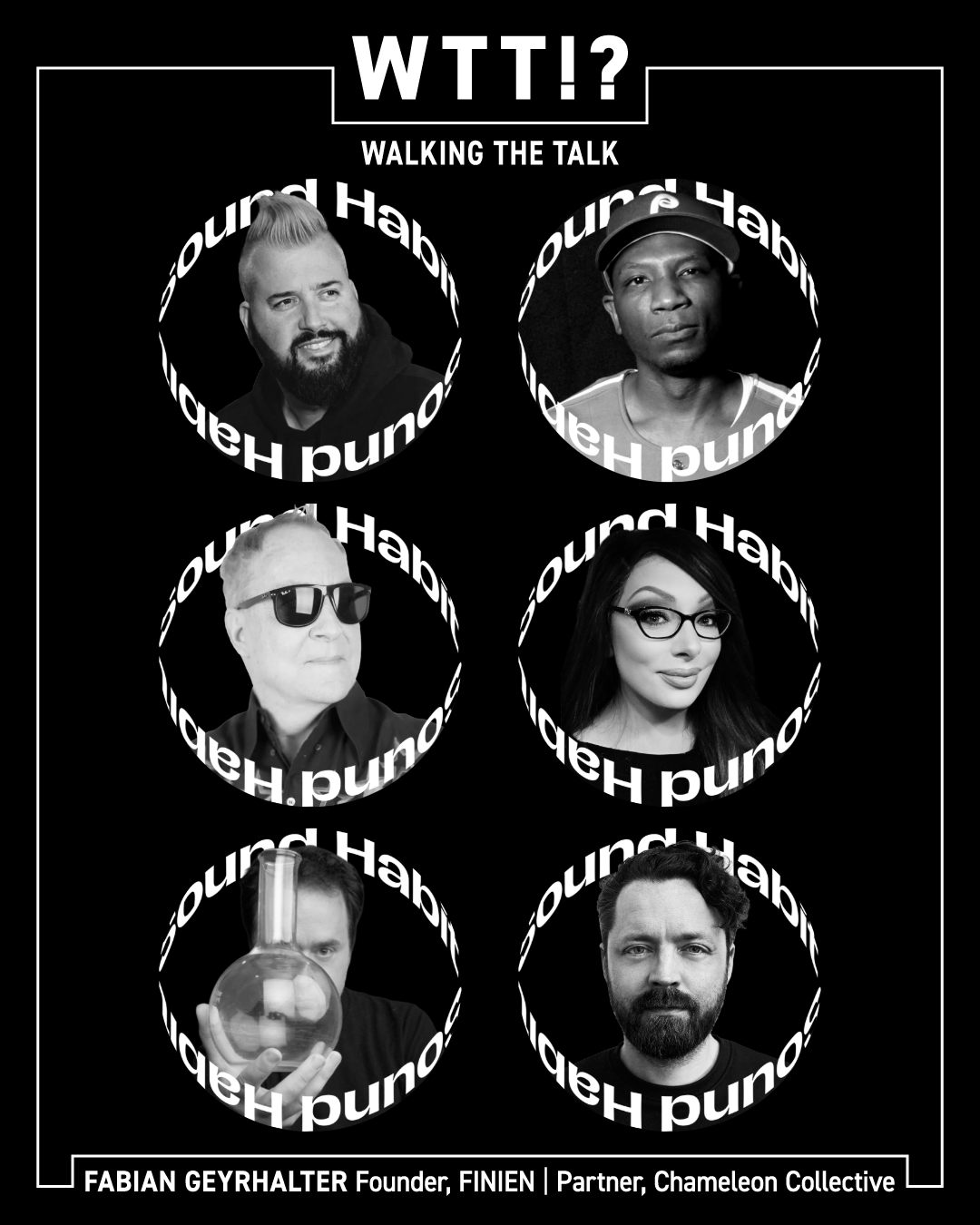
[Part 1] At 7:00 AM today, I interviewed the man behind the crazy-successful group Gotan Project.
This was not for Hitting The Mark. I did this for Toneoptic, and it is one of many brand marketing strategies I pursue.
When I started Toneoptic, I had to lean into what I knew and the resources I had. After hosting 130+ HTM episodes, I knew how to conduct interviews, create an interesting show, and had the setup.
But just when you thought this was easy, hold your breath. I set out to talk to music icons who actually have record collections because I wanted to ask about the first record they bought and their rarest gems. I wanted it to be a thrill for listeners.
I relied on personal intros to get the first two episodes of the show (Sound Habit) going. My most connected advisor rejected making intros because big talent seeks money in return, and we were not ready for it, he advised. Not an answer I was ready to accept. A habit I share with many startup entrepreneurs: a “no” means “try harder.”
So I spent countless evenings researching artists with record collections and DMing one musician after another. I was basically cold calling. Hundreds. It felt strange.
And then it happened. Fred Schneider, the frontman of the B-52s replied, and I got to tape him for episode 3. At that point, I knew the show had legs. Today’s interview with Gotan Project was only the seventh episode I taped because it is still hard to get the right people on, but just like running a startup, it gets easier over time. Along the way, I made friendships and found advisors and collaborators.
I try to navigate diverse musical genres to attract different fan bases. It’s a hustle. A fun one. Like most of the hustles you will hear me talk about in this new WTT series.
[Part 2] Studying Communication Design and having a career as a Creative Director and Brand Strategist, I frequently exhausted my mind during a typical workday, but never my body.
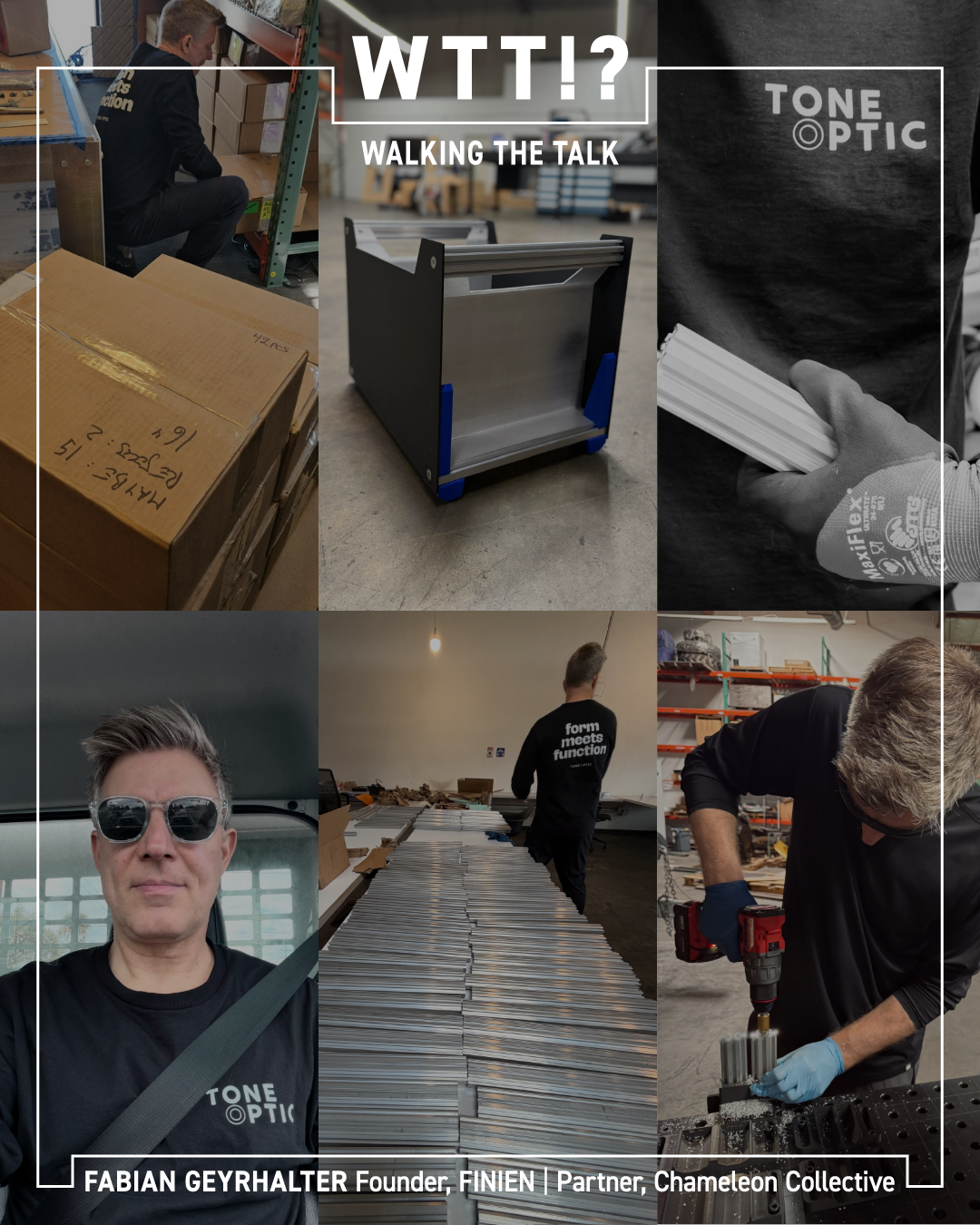
A goal with Toneoptic has always been to produce products locally, in California, regardless of how difficult everyone made it sound (they were right). With our new product, we made that dream come true: Our factory space that also serves as a warehouse.
Every piece of the product is being touched by my hands. Extrusions are cleaned, aluminum parts drilled, and parts trucked from the powder coater to the anodizer. Trucks I learned how to drive, filled brimful with pallets of things I mastered how to pronounce.
Over the past half year, I learned to cherish the balance between physical and mental stimulation and to embrace the new sensation of working hard with my body (which is very different from working out).
When I was done holding a bag of ice in my right hand after tapping 160 pieces of aluminum extrusions today, I wondered why this pain makes me feel strangely fulfilled. It comes down to a sense of completion that is lacking on a day filled with virtual meetings and e-mails.
I cherish my work of brand identity and strategy, but after handing off a final logo, for example, you won’t see your work in Times Square at that time, for a long time, or perhaps ever. You know you did great work, it is stimulating, but besides an invoice sent and appreciation received by the client, you basically move on to the next project, until a while later, you might start seeing your work being enjoyed in real life.
That bag of ice on my hand, those 160 extrusions that are now tapped, those 200 50-pound boxes I moved to another area in the space, those 1,200 aluminum plates that have now been quality controlled, one at a time, that is something that is real.
It happened. I can see it.
And more so, I can feel it.
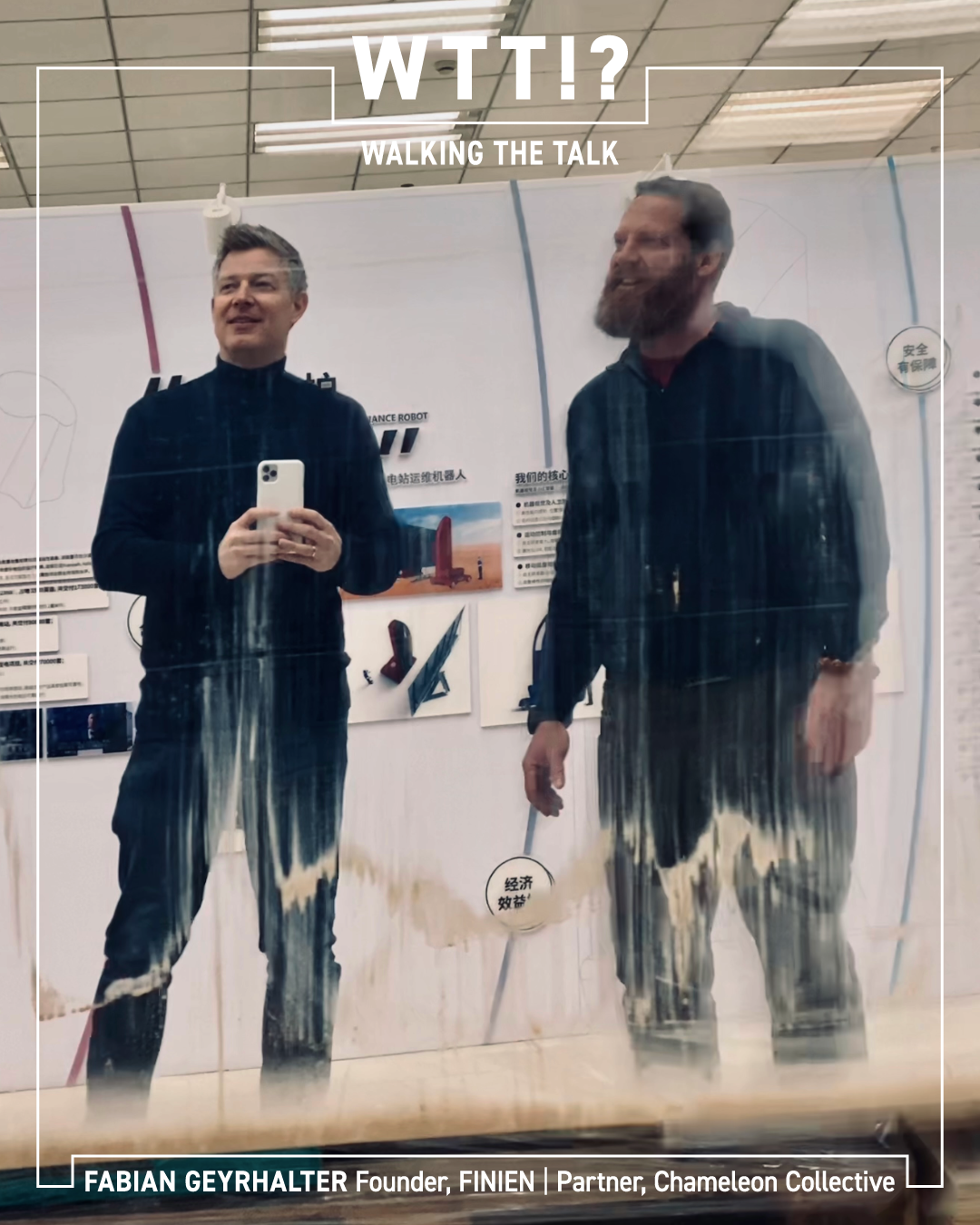
[ Travis and I on a factory tour outside Shanghai in 2024]
[Part 3] One significant thing I did early on with my startup?
I created an Advisory Board.
It was not a nice-to-have but a must. Here is why:
With Toneoptic, besides the creative innovation aspect, I am blending four key things:
1. Producing physical objects
2. Acing direct-to-consumer sales
3. Understanding a Hi-Fi audience
4. Killing it with branding
I knew very little about three of these, but all four were needed to give the company even a remote chance of survival.
I put together my advisory board strategically to fill that void:
I needed a leader in product development: Travis Rosbach, Founder of Hydro Flask, was on my show, Hitting The Mark, so I reached out.
A leader in Hi-Fi: James Johnson-Flint, Owner of the highly admired British hi-fi brand Cambridge Audio, did some advisory calls with me (the other way around) throughout the years, so I reached out.
And on it goes.
What is so magical about this – beyond all of them (David Fredrickson, Chris Monaco, Stephanie Bregman, Stuart George) having been crucial to the success of the company – I learned to practice and deeply appreciate the concept of ‘co-elevation.’
A mutually beneficial quarterly, monthly, or – as is the case with Travis and me – weekly conversation to check in and to lean into each other’s expertise to gain tips, contacts, a fresh perspective, or simply a kick in the butt.
With all the wild stuff a startup journey throws at you, these co-mentorships – that turned into friendships – are what entrepreneurship is about.
I don’t take them for granted, and I hope that anyone building anything out there is taking this as my kick in their butts to call up the right people in their circles.
You will be surprised by how many will take you up on it and by what it can do for you, both professionally and personally.
[Part 4] Advice we all heard: “The best way to see if an idea for a product will have an audience is to put a sketch or a prototype out there and see how people react.”
And so I learned the hard way that this may not be the best advice, or at least it needs to come with a fat asterisk about production timelines and the risk (!) of virality.
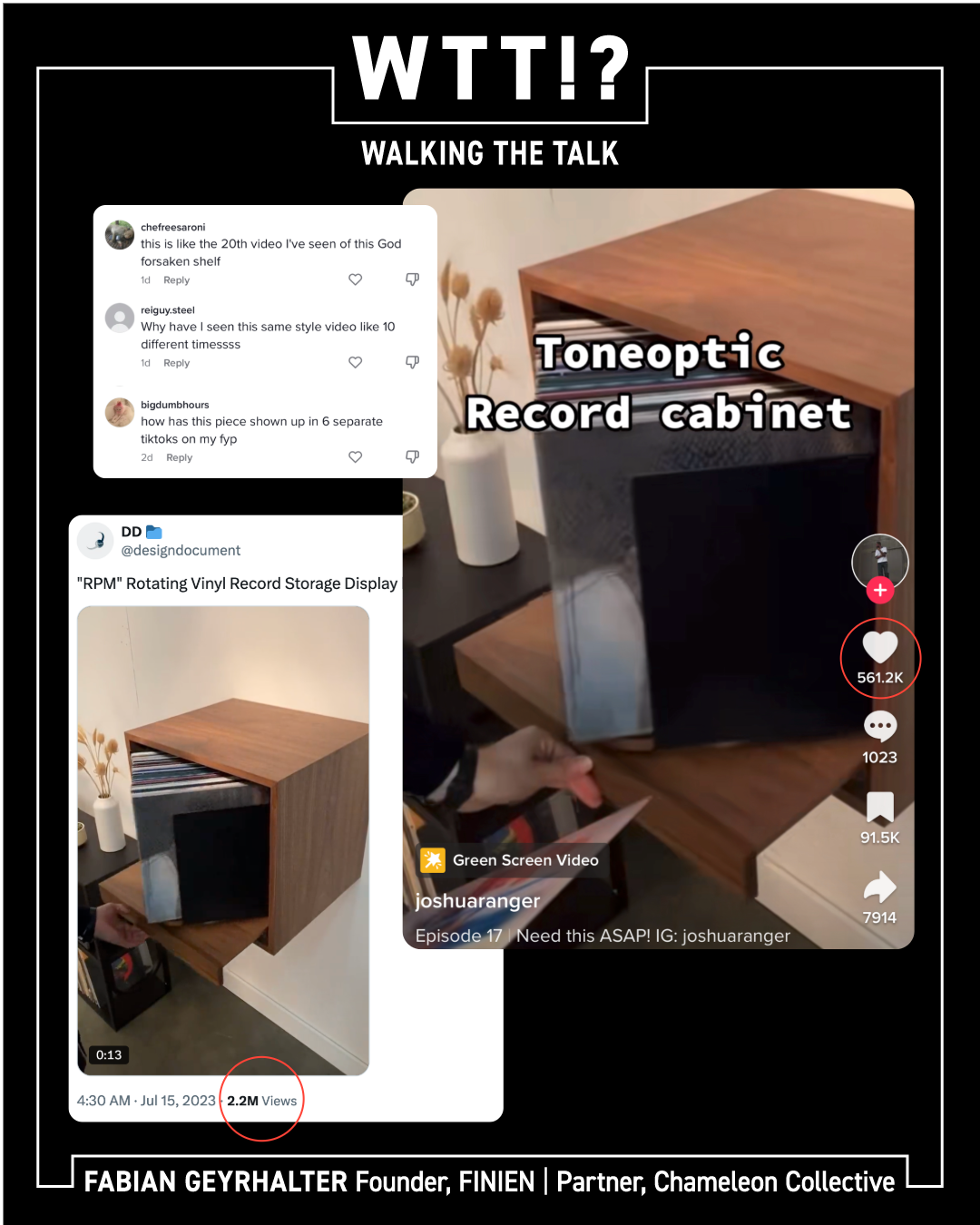
Early on, I shot a prototype: a beautiful walnut box containing my rpm mechanism, which allows records to be showcased library-style and easily flipped through with an elegant motion. I put the product online at a ridiculously high price to see how people reacted to my innovation. I quickly learned that the price was indeed ridiculous, shipping was impossible given the design, but that people loved the mechanism and solution.
A year and a half later, this video was picked up out of the blue and went viral across all major social platforms, with one TikTok clip alone garnering 2.2M views. It was the night I was heading to the airport for vacation, and the week I gave the green light for the production of a different flat-pack-shipped design. No more walnut box. Not what was shown in the viral video.
People loved the clip; they loved the design, but here I was already much further along, and I saw very little reward for an ill-timed moment of unplanned virality, besides making some great connections with A-list musicians and growing our social following. But no sales since the product people saw and wanted, they could not get.
We are now months away from bringing back a similar design. At a fraction of that original cost and with no shipping issues.
But the viral moment has faded.
Lesson: Don’t publicly test your market with a unique product unless you are ready for a wave of positive responses and a process to make that product a reality very, very quickly. Virality comes and goes within days, or if you are lucky, weeks, but R&D and fabrication take months, or more likely years.
[Part 5] When I launched the Toneoptic site featuring a (rather overpriced but) gorgeous prototype, it was an exciting time.
I have launched my first brand. A product I invented that the world has not seen yet, in a market I did not know well.
Finally, a message sent through my Shopify site appeared in my Inbox. It was a rather exciting moment. Even if just to know the contact form was working!
Was it from an interior designer who wanted a unit for their client?
Or a press inquiry?
A customer with questions about the best wood finish for their listening room, perhaps?
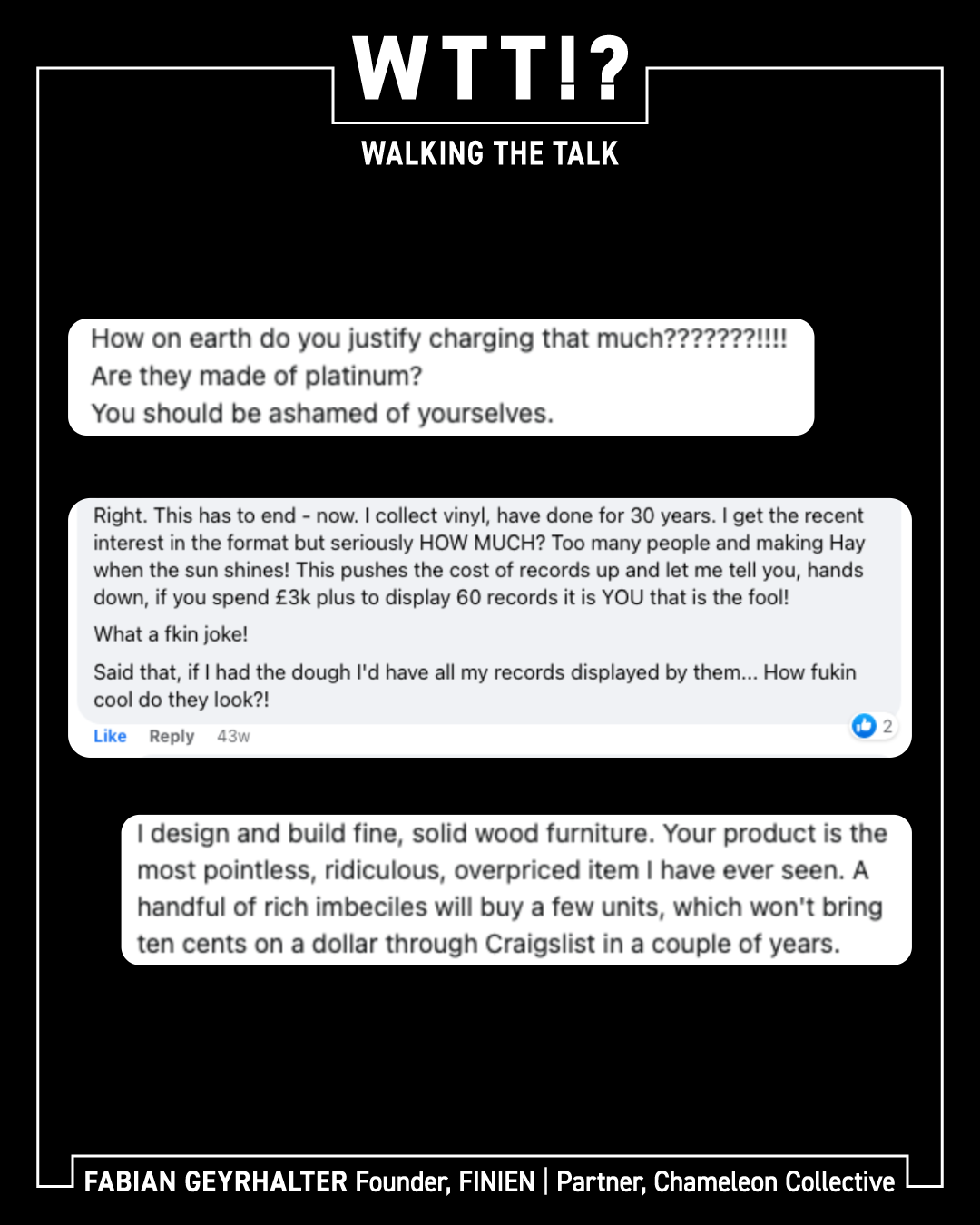
In fact, it was from someone who wanted to share how they felt. Not about the design, or the idea, or the brand, but really about me, whom he did not know personally:
“You should be ashamed of yourself,” were the words that popped into my wide-open eyes.
The advice I give founders and CMOs ran through my head: “Your brand needs haters in order to attract lovers.”
Well, screw that, I thought at the moment. And a very, very long moment it was staring at that e-mail.
A glass of wine later, I made peace with the philosophy I like to share and hoped that fans would follow; maybe tomorrow, I thought…
No such luck.
A day later, I received another rant in response to a Facebook post (pictured). I sent a very civilized reply, to which he answered: “I just wish I could afford them.”
And there it was – my smile returned to my face. And this reply taught me everything I needed to know as I set foot on this consumer brand journey filled with pointless rants and unqualified opinions.
It’s difficult, and I’ve learned to pause and cherish the positive moments rather than dwell only on the multitude of challenges entrepreneurship brings by design, as I remind myself of Tom Hanks’ line in A League of Their Own: “It’s supposed to be hard. If it were easy, everyone would do it.”
By year’s end, we anticipate having sold close to a thousand of these $350 units.
Only you know your vision; you have to stay focused and believe in the outcome.
And that’s what I tell you, as much as I keep telling myself, as it is the only way to save your mental health and create a brand built to zip right past the haters.
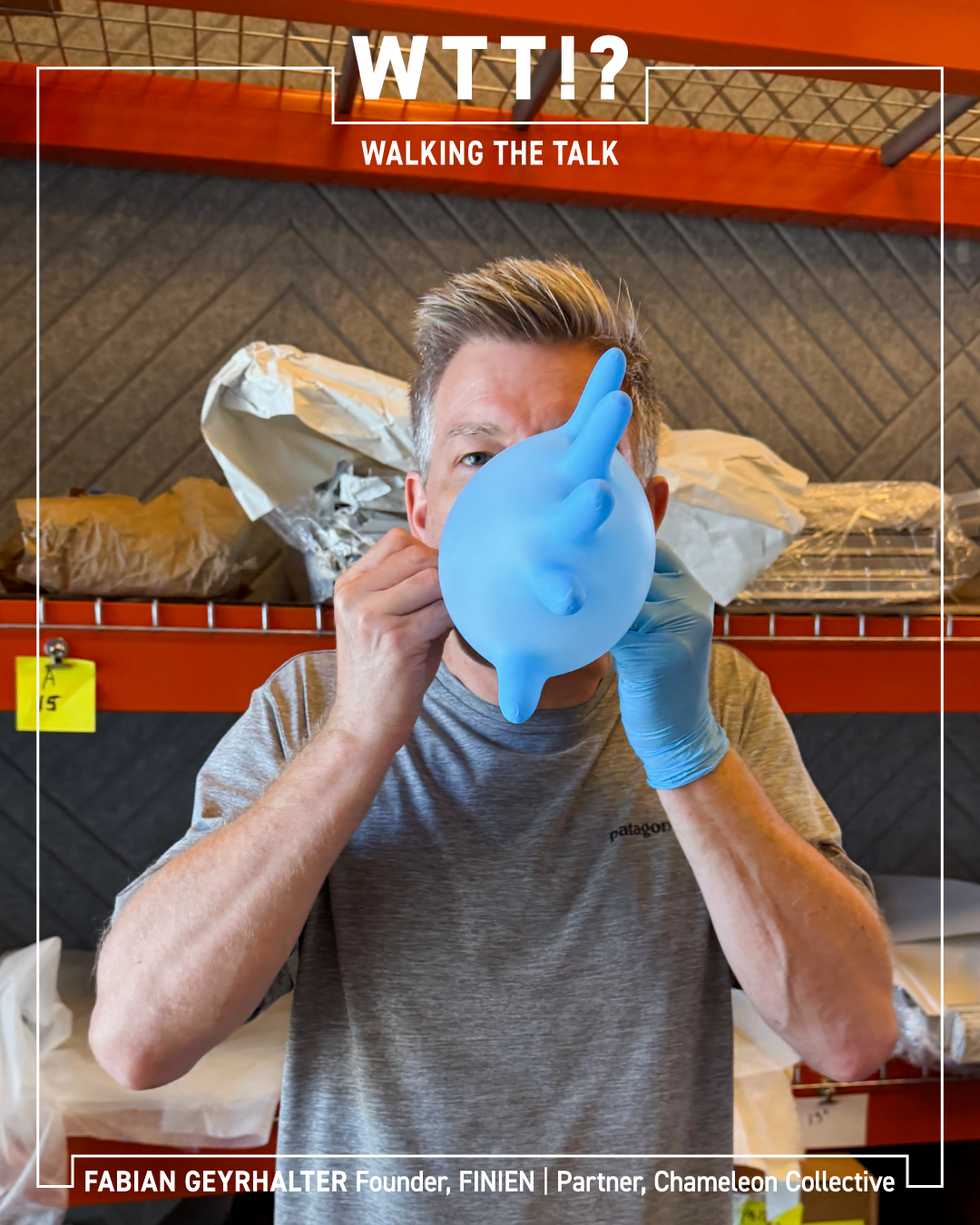
( Me, not in my black dress-shirt uniform, being ‘last week years old’ learning that you blow into plastic gloves to make them easier to put on. Yes, I learn on the job.)
[Part 6] I was a guest on a podcast yesterday (more on that when the episode airs), and Edilsa Bueno, the wonderful host, crafted a theme around the idea that my career is not a ladder or a lattice. Not even a ‘Career in Motion.’
We decided, towards the end of our conversation, that it was a thread.
Welcome to the ‘Thread Career,’ then.
Running FINIEN and being a partner at Chameleon Collective can confuse some clients initially, but it really is just semantics. I am a brand strategist, and FINIEN joined the Collective. One role that looks like two. At the heart? Brand strategy.
Me being an author, an advisor, a podcast host, and a mentor? It’s all about brand strategy.
And then there is Toneoptic, a D2C product innovation brand I happened to start out of a need I saw for myself. This is where one would think I lost my organized career path or my professional identity, of sorts.
But nothing could be further from the truth, as it was the next logical progression of brand building: I helped hundreds of clients shape and reshape their brands; I mentored thousands on the same topic. I wrote four books on the subject.
Wasn’t it about time I myself did what I spent all my career doing as the backseat driver, or in many cases, the co-pilot wishing to get my hands on the steering wheel?
Well, now I have.
I am steering.
And I am building the car while reading the manual while going full speed.
It makes all the sense in the world. In the end, this brand’s strategy needs to reign supreme to survive and thrive. This was decades in the making; I just haven’t looked at it quite that way until today.
What is your career thread? I am positive you can uncover one.
[Part 7] As an authority (I prefer it to expert, and definitely to guru or ninja – please!) in brand building, I talk a lot about the importance of building community and how it is different from gaining social media followers.
With Toneoptic, I had to find my own path of creating a community for the brand.
In an almost naive way, I did something so simple, so inexpensive, and so not-corporate that it actually worked.
I am very much my audience: a design and music-obsessed record collector. We like exploring new vinyl stores and finding rare and exciting records.
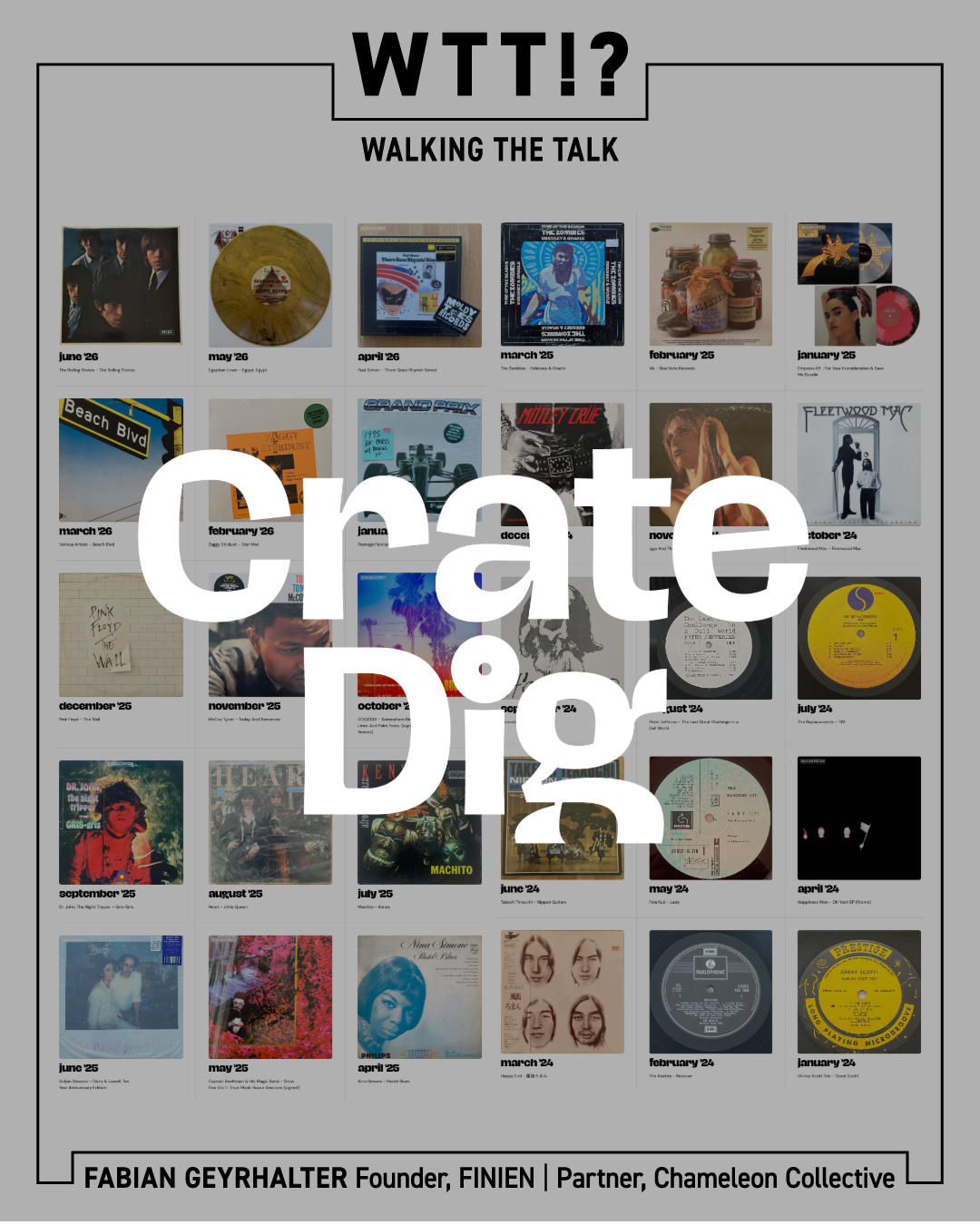
So I launched Crate Dig, a monthly giveaway of an exciting, usually rare, record. I seek out a new store, ask the owner to pick a record that recently came in and that (s)he is excited about, and that costs around $80, and that’s the record I then give away to our tribe.
I get to know store owners, and they learn about Toneoptic. Our community starts looking forward to seeing where I go and which record is up for grabs this month.
I kept it real. No big brand collab. Just an $80 record that shows I am one of them. It’s the stuff we seek. And we enjoy supporting local record stores just like they do.
We have done this 31 times now, and the records we gave away ranged from a Keanu Reeves-signed record from a store in Chicago to the Rolling Stones’ self-titled 1964 Mono LP from a shop in Santa Clarita.
This month, we are giving away Mac Miller’s 10th-anniversary box of GO:OD AM, featuring two white LPs, plus a single-sided etched yellow LP with bonus tracks. Check it out and enter at toneoptic.com.
Building community this way is an act of shared passion, and that is always a great place to play in as a brand.
[Part 8] An app is a wonderful thing. You build it, push it live, and then keep improving it while people are already using it.
The traditional side of product development is a completely different beast.
Physical products require endless adjustments, prototypes shipped around the world, factory visits, and production runs of hundreds or thousands of units at a time. There are far fewer chances to pivot.
Then those boxes arrive in a warehouse. And you pay for every day they sit there instead of in a customer’s home.
So you have to sell quickly. But not too quickly, because reordering takes time and a lot of upfront cash. And of course, by then you’ve already learned things you’d love to improve in the next version.
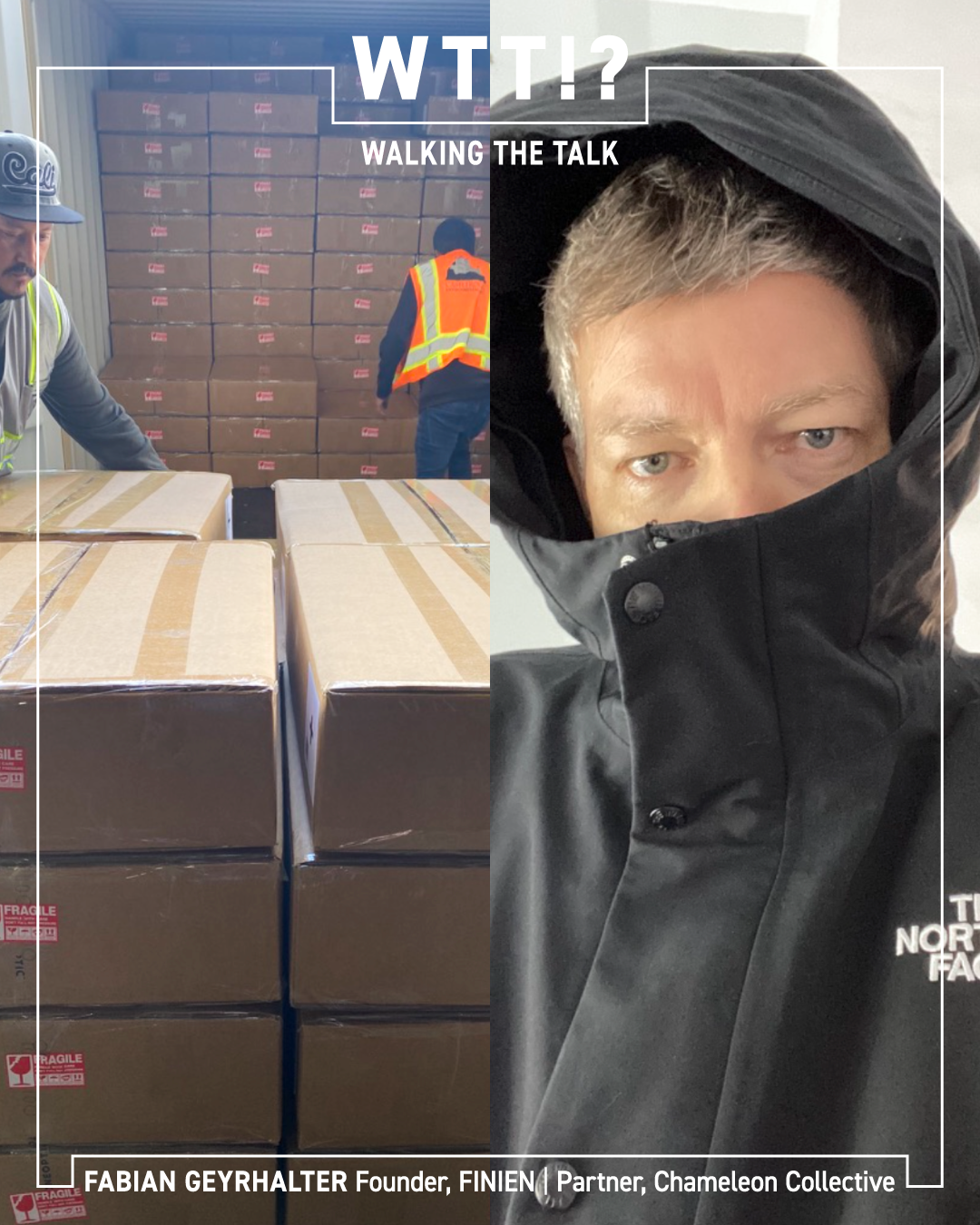
Pictured is me in China, in our original factory, at 30°F, working the production floor assembling and packing. A month later, a container with 500 Toneoptic products arrived in Los Angeles.
Today, we’re manufacturing all new products in Los Angeles. The ambiguity and complexity of overseas production is largely behind us. Instead, we’ve traded it for a different set of challenges. Investing in specialized machinery, sourcing aluminum by the ton, and building a manufacturing process that can scale while still allowing us to improve.
I often see titles like Product Designer or Product Manager, but most refer to digital products. The difference is significant. When you launch an app, you can immediately react to user behavior and iterate. When you launch a physical product, you have a warehouse full of thousands of decisions already made. Every decision echoes months into the future.
That’s been one of my biggest lessons, and it’s one that I keep learning different variations of on a daily basis. It’s what has made building Toneoptic one of the most complex learning experiences of my career.
[Final, Part 9] I spent my career as a brand strategist preaching to companies to be better. Better to their employees, better to their customers, and last but not least better to the environment.
When I started Toneoptic, it was deeply ingrained to walk my talk.
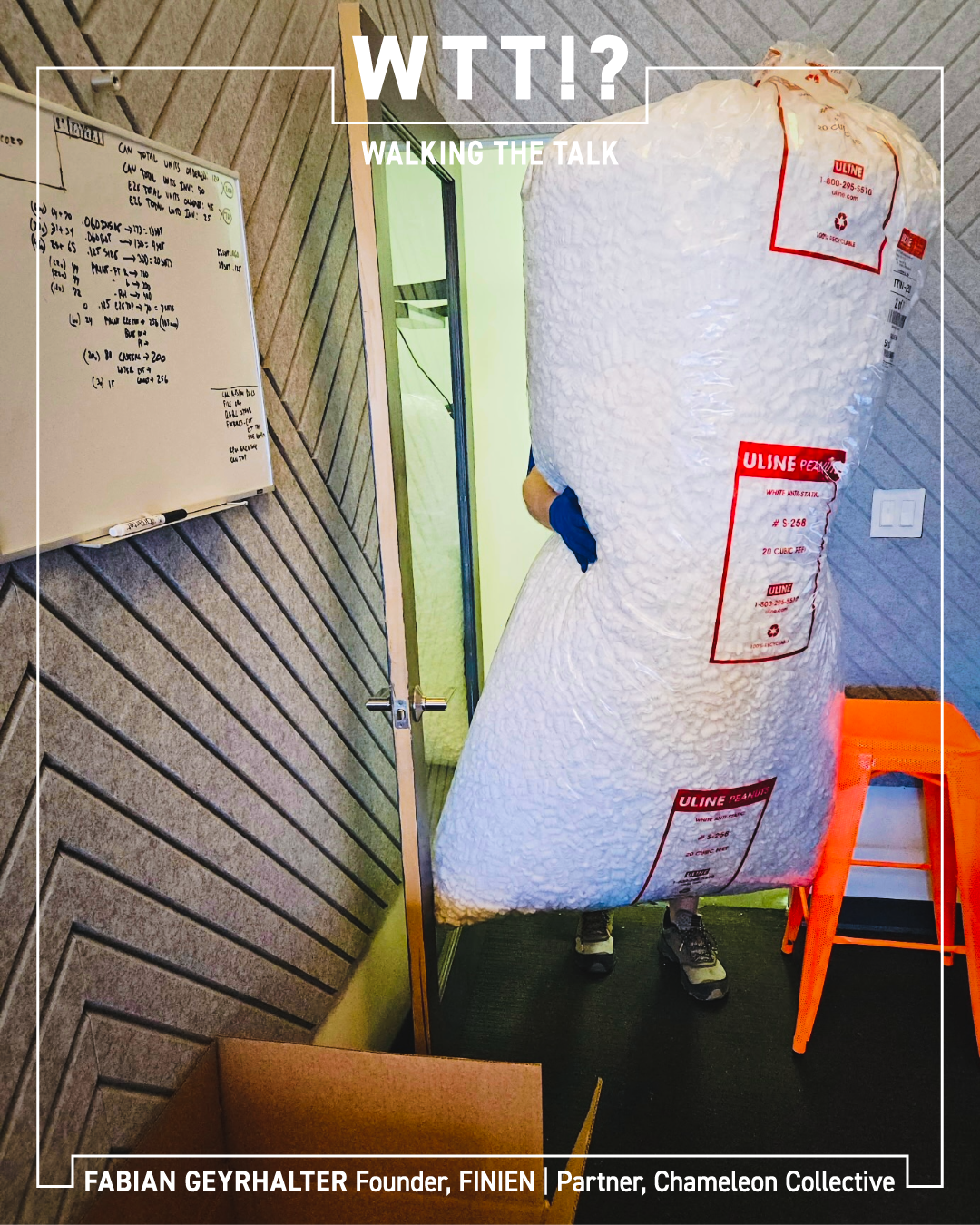
Fast forward, pictured: Me horribly stumbling on my walk of shame.
How did I get to a point of cutting corners?
Simply put, it came down to startup survival.
Our first product had to be made outside the U.S. to keep the cost low enough that all 143 premium parts were still somewhat affordable (to the few). Producing it in the U.S. from the get-go simply was not an option that customers were ready to open their wallets for.
I wanted packaging to be sustainable. Reading the fine print of biodegradable peanuts, I learned that they are made of corn and will attract rodents. That, we can’t have in the factory. Unless we create a ginormous sealed container for the huge amounts of peanuts. And that we do not have the resources for yet.
This list goes on, and I find myself walking this walk of shame daily. Daily, until we will be at the point of creating a business that is financially sustainable; and I promise myself (and you, and my stakeholders) that the minute we can, we will.
But for now, I am proudly holding a ginormous bag of horrible-for-the-environment peanuts from ULINE, padding our backs that we are producing the new products locally now, and we are packing deliveries securely so our customers will love their products. The brand will have to follow suit.
Until we are a sustainable company, we simply, and sadly, can not be as sustainable for the planet as we wish.
One step at a time. Even if it hurts.
That is the real painful cost of starting small. And a wake-up call for me.
Will I go any easier on my clients? 99% of them, I sure will not. But that 1% that is in true startup mode like we are now, you bet. I might even swing by to lend a hand.
⚫ Learn more about the Toneoptic brand: www.toneoptic.com @toneoptic
CATEGORIES: Blog Startup Advice
0 COMMENTS

Fabian Geyrhalter is the Principal of FINIEN, creating clarity for brand transformations.
More Key branding lessons to save time and money while winning hearts and minds.
Key branding lessons to save time and money while winning hearts and minds.
How to turn any venture into an admired brand
Your Comprehensive Guide to Launching a Brand: from Positioning to Naming and Brand Identity