
I am sick. And it’s not the flu.
I am sick to my stomach looking at all those amazing new ideas from sharp entrepreneurs going up online. Ideas that are as varied as they could possibly be, all nurtured by a revolution in online fundraising and fueled by an economy that is looking for the next big thing. Many of those ideas I see are truly revolutionary, but it still makes me sick looking at them. They all seem identical and I can not differentiate one site experience from another.
The internet gave entrepreneurs the ability to use cheap, often free, templates and it happens that everybody chose the same ones. I can’t blame them, these are robust templates taking advantage of responsive web design, while being equipped with all the features necessary for most entrepreneurs this day and age. They look and feel modern and they represent what I’d call a MVW – A Minimum Viable Website.
One thing gets lost though, sometimes is even missing from the get-go: A big brand entrance through a unique visual language that differentiates the brand enough to stay in the audience’s minds.
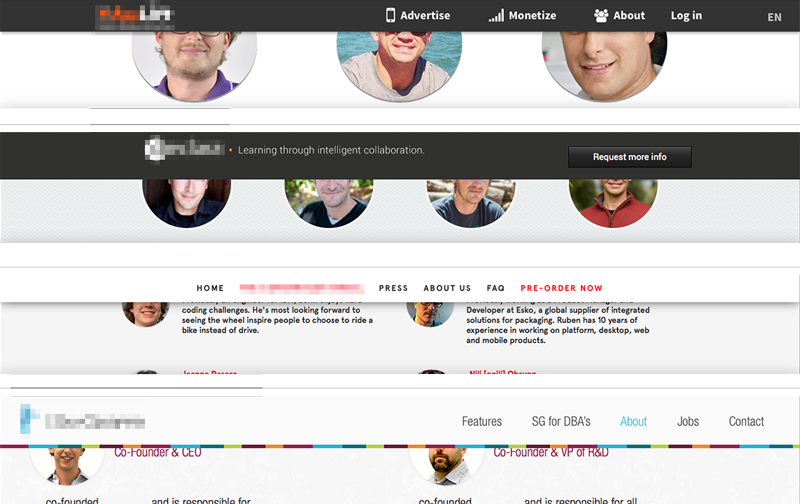
Above: Four startup sites I came across recently. Who is who? Which product is which? Wait, was that the site of that company I liked so much?
Conceptual and visual creativity used to be the integral ingredient of any brand introduction in the heyday of printed communications – they now are missing in action. To many of today’s entrepreneurs it is the product/service idea alone that counts, but sadly that idea gets lost without being embedded into a branded environment. The internet provides free tools; it does not mean that those fit into your company’s launch strategy. Leverage them when appropriate, avoid them when launching a brand. Consumers will get lost and your unique idea will look like a standard idea by using standard templates.
Be bold, be different, be conceptual. Go ahead and inject your enormous amount of creativity, strategy and moxie into your online presence, because it will be the place most people will meet your product/service first. And as far as I can tell it’s anything but standard.
CATEGORIES: Blog Your Brand Launch: Digital
A couple of weeks ago, Bob Garlick, host of Business Book Talk (poking through below), contacted me to schedule an interview about our book ‘How to Launch a Brand.’ With Bob sitting in Vancouver and myself in Los Angeles, I was immediately taken by surprise as there was no script that he shared with me, no canned answers to prep, no warmup chatter and no edits were made to our conversation.

The result is an honest and stimulating conversation between two individuals with a keen interest in design, branding and entrepreneurship, which I’d like to share with you. Below audio not only gives you a peek into our book, but also covers topics such as misconceptions of branding, brand strategy, how brands need to be different than 15 years ago and how to connect with your customers through branding:
Audio clip: Adobe Flash Player (version 9 or above) is required to play this audio clip. Download the latest version here. You also need to have JavaScript enabled in your browser.
(Can’t see above audio player in your E-Mail? Please listen to the audio via our site)
Now that I crossed the bridge by posting audio (how adventurous), I might as well share a quick video in which I further define ‘brand’ specifically for startups, filmed at a mentoring session (how advantageous) at the Founder Institute in San Diego two weeks ago.
CATEGORIES: Blog Startup Advice Your Brand Launch: Brand Atmosphere Your Brand Launch: Brand Strategy Your Brand Launch: Digital Your Brand Launch: Identity Your Brand Launch: Naming
I spend my days talking about early stage branding with startups and I learn a lot about their behaviors, struggles, fears, and of course their amazing energy and innovative mindset that I thrive off. At times I will use the New Brand Post platform to discuss startup culture and give entrepreneurial advice. It will save you from getting brandexia (a sudden sensation of anxiety caused by the over consumption of the word ‘brand’ by entrepreneurs, often leading to serious cases of brand self-awareness), while still gaining actionable insights and advice for your early stage startup.
As the holidays are approaching (Happy Thanksgiving to my US-based readers), so are company parties, chatter about Q1 goals, and speculations about holiday bonuses. Let me start off by saying that cash-based holiday bonus incentives are a wonderful thing, no doubt about it. I always love giving as well as receiving them thoroughly. Employees appreciate the gesture of appreciation and the fact that they may be able to plan a trip or buy some gifts they otherwise might not have had the opportunity to afford easily. But people investing their time and talent into a new venture understand that cash flow is one of the keys to the survival of the venture, that cash needs to be put to work in small chunks and in strategically calculated places that will directly impact the company’s growth (and yes, brand). Most early stage startup employees are very aware that they made a commitment to give up some traditional monetary perks for being part of the startup tribe, for investing into their future.
As a founder of a new cash-strapped venture, the most cost-effective and best gift for hardworking employees is the gift of empowerment. Create public awareness of staff by talking about their valuable insights and specific contributions they made to the company, publicly via a blog post or newsletter with the title ‘The Season Of Giving Back To Those Who Gave (Your Company Name) Their Best in 2013‘. Mention each and every one of them with specific insights they provided, or actions they took that moved your company forward, full names and photos included. If you have more than 8 employees, spread it out through the month of December. Share it via Social Media and tag them so the article shows up in their networks signifying that this is not out of self-interest, but pure thanksgiving.
Instead of giving a low (= insulting) cash bonus, or a gift that may or may not resonate with your staff, try honest public praise and let me know how it is being perceived. I bet they will thank you, sincerely.
CATEGORIES: Blog Startup Advice
“The word ‘brand’ needs a re-branding – due to its brand longevity the brand legacy is not brand-correct anymore,” I heard myself say unexpectedly in an interview earlier this week. It has been on my mind for a while. To no surprise, running a brand consultancy I am using the word a hundred times a day. Furthermore I just published a book titled ‘How to Launch a Brand’. The word gets tiring, especially since it leaves a bad aftertaste and I feel the need to first convince people that it is not a bad term before I start talking about it any further. Brand is not a four letter word.
Despite the negative connotations with the term, branding is more important today than it has ever been before and it is not only consumed, but furthermore created and curated by the masses through their very own personal (public/social media) brand. Brand is alive and kicking and we will not be able to change the term, but one can change the perception away from luxury good logos (Gucci, Chanel) and larger-than-life corporations seen as evil-doers (Exxon, Walmart) to a modern necessity, which, if created and nurtured in an honest and authentic way, turns ‘brand’ into a holistic ‘aura’ of a product/service provider (or person) that we are allowed to have admiration for (From an iPhone to a Celebrity), aspiration towards (From a Nonprofit to a highly ranked University) and sometimes draw inspiration from (From Ted Talk to Oprah).
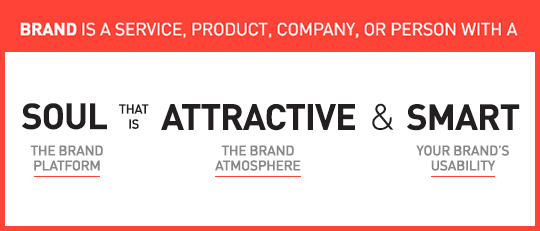
To me, a brand is a service, product, company, or person with soul, that is attractive and smart.
1. Soul is the beating heart, the reason a company should exist and why your initial attraction matures into love. You put your trust in brands with a soul and most often your money follows soon thereafter. Not much different than with human relationships, soul is the reason why we care for each other, or a particular brand.
2. Attractive is the brand aura that allows for the gut instinct emotional connection you feel when getting in contact with the brand. It is the design and the voice that is carefully created and curated over time in a particularly consistent manner. Attraction is not to be mistaken by shallow beauty.
3. Smart is its usability. How easy is it to engage with the company/product/service/person? In the tech industry it is User Interface and User Experience, with consumer products it is the product and packaging design and with services it is often the design of key offerings combined with its delivery.
Now that we ‘talked’ about the complex strategy that creates the beautiful simplicity that makes a brand, maybe we should give the word another chance?
CATEGORIES: Blog Your Brand Launch: Brand Atmosphere Your Brand Launch: Brand Strategy Your Brand Launch: Digital Your Brand Launch: Identity Your Brand Launch: Naming
Car names run the gamut from great names that evoke strong imagery and emotion like “Mustang” via alphanumeric naming systems to underwhelming names like “Golf” that fall flat and fail to impart a personality. What is behind these sometimes great, but more often bizarre naming strategies of these car companies? Inspired by a late night conversation I had with the CMO of a large European car brand the other day, the question lingered and I had to dig deeper:
A broad overview of naming strategies in the automotive industry reveals that mid-price companies like Volkswagen, Toyota, and the European car company Skoda opt for either using real words as names — a lá Toyota “Land Cruiser” — or made up names like Volkswagen “Jetta”. Higher-end brands like BMW and Lexus tend to use an alphanumeric naming strategy. By using real names, the consumer connects with the model of the car: A driver of a Ford Mustang is more likely to say “I drive a Mustang” as opposed to “I drive a Ford”. Alphanumeric names tend to place the emphasis on the make of the car, the brand, over the model: A driver of a Lexus is much more likely to report “I drive a Lexus” than to say “I drive an ES”. That is the power of Alphanumeric names, yet its downfall is that they offer little emotional connection to the actual car model and most often lead to frustrating confusion during the shopping process.
As you climb to the top of the pricing scale, with ultra luxury vehicles such as Bentley and Rolls Royce, the strategy of using real names and/or fabricated words for vehicles comes back into play. Words such as Phantom, Ghost, and Wraith depict the current line of Rolls Royce vehicles conveying a sense of mystery and intrigue.
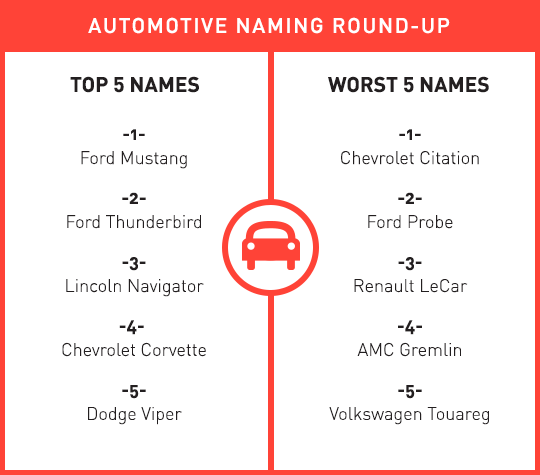
Here is our round-up of the top 5 best car names and the top 5 flat tired names. We focused on ‘real’ names and not ‘auto’ names (as I may call them, pun and all) as the 750 Li Sedan (BMW) VS the IS 350 F Sport (Lexus) might have bored you.
What do you think? Did we miss any?
CATEGORIES: Blog Your Brand Launch: Naming
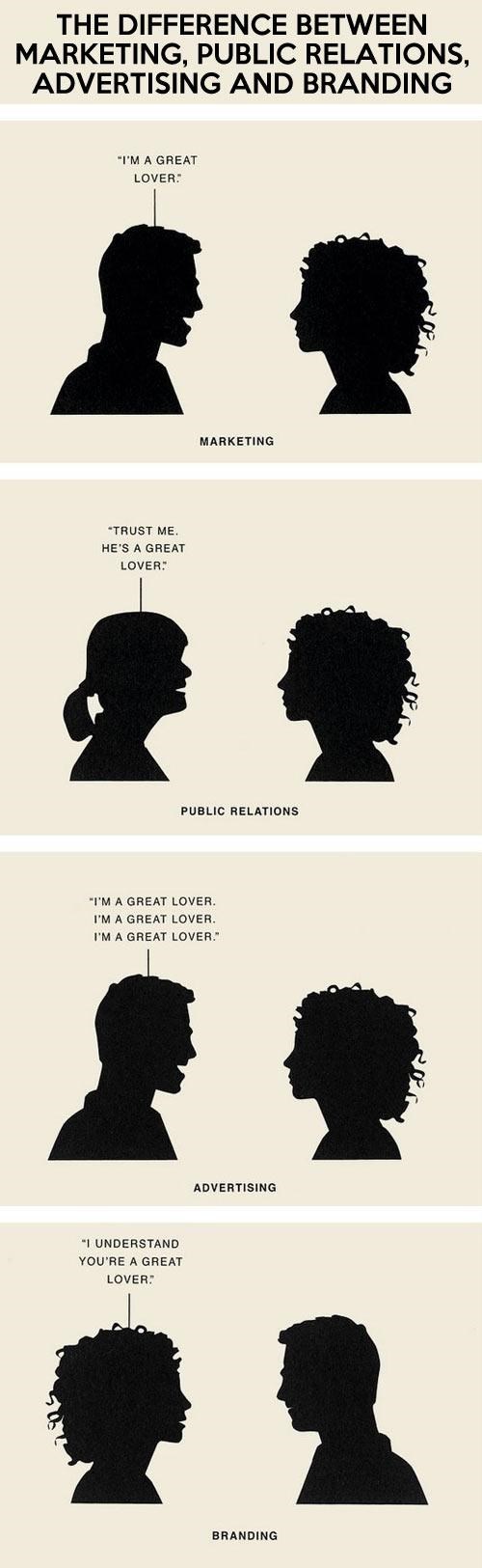
Image taken from ‘Zag‘ by Marty Neumeier
CATEGORIES: Your Brand Launch: Brand Strategy
‘Is branding the key for a successful start-up?‘ is the topic for a speech I was asked to give at Internet Hungary this week. I could make it a 5 second speech and say ‘Yes, it is one of the most important factors,’ but lucky for me the topic is broader and will go deeper into the keys of creating a successful brand. Let me use this opportunity though to dive knee deep into this question as some brand elements are more important to certain types of companies at time of launch than to others:
No one shall skip the Brand Platform creation at the onset of a new venture, unless you want to compete on price, be boring and unattractive to work for, and are not keen on acquiring the right target audience at time of launch. You tackle the Brand Platform right after you draft your business plan (from fully fleshed out to napkin version – all are acceptable forms of business plans at this stage, depending on your own comfort level).
Launching with a meaningful and unique Name and Brand Identity Design seems like a no-brainer, a must for all entrepreneurs. If for whatever logical reason (budget not being part of that logic) you feel forced to launch with a sub-par name and logo, knowing you will have to go through a (more costly) re-naming and re-branding exercise upon showing first successes, it is the easiest to do for a tech startup or B2B venture that requires solely test users or relies on a very small niche audience, which will make it easier to educate them on this big and disruptive brand change down the road. Some Tech Startups (especially apps) are prototyping until the day of launch, making it an easy excuse to skip this essential step, whereas it is much more advisable to work on a prototype whilst formulating the brand platform, that way you are educating yourself about the target audience while you see them use the actual product, enabling you to create a meaningful brand that will not have to be rebuild soon thereafter. A win – win.
Needs for Brand Atmosphere Touch Points vary in importance and specifics from company to company with retail and other mainly offline B2C companies leading the list, E-Commerce and Tech Startups surviving off some basic, consistent touch points bundled with heavy E-Marketing template creations, while most B2B brands fall anywhere in-between, depending on their structure and audience. If bootstrap is your motto, these can be rolled out over time, making it essentially more pricey, but allowing you to spread the cost.
It only makes sense that ventures leading with digital need to make UI/UX Design part of their strategic brand implementation. Most companies – B2C/Retail and B2B – rely heavily on brand-centric (responsive) web sites to attract and convert leads of different types. For Online Retailers and Tech Startups where the web site also is the product, the prototyping should be addressed in parallel with the Brand Platform creation as it will educate the branding process as a whole. Some companies are able to save on development costs using existing WordPress templates (and such), but brand will still be key at launch.
To conclude, whenever a startup founder tells me (and they tell me all the time) “I can not afford branding at this early stage of my company formation” I reply with “No, you cannot afford not to brand at this early stage of your company formation. Unless you think a strong brand is worth less at time of sale or IPO than an ugly yet functional prototype.‘ This often marks the end of our conversation, until they call a few weeks later to get started with branding their new venture.
CATEGORIES: Blog Startup Advice Your Brand Launch: Brand Atmosphere Your Brand Launch: Brand Strategy Your Brand Launch: Digital Your Brand Launch: Identity Your Brand Launch: Naming
I was 8 when I purchased my first Depeche Mode record. I was fooling myself. I did not make this (rather big at the time) purchase because of their music; instead it was the first colored vinyl record I have seen and I fell for the surprise and sheer beauty of it. It was different. A couple of colored Depeche Mode records later I actually started enjoying their innovative electronic sound, because that too was different. And as all of the b(r)and touch points started lining up for me over the years, I turned into a fan.
When I was 18 I took my first step into entrepreneurship by organizing, designing and hosting a concert After-Party in Austria making my first $20,000 (and since had the opportunity of sharing a drink or two with the band on several occasions). The band’s visual design language was mainly crafted by photographer/director Anton Corbijn, who I cite as a major reason I turned to study Graphic Design, enabling me to do what I am doing today. Corbijn also later served as a key inspiration for my photography. Needless to say, my interest in this band for the past 30 years has a deep and personal meaning as it helped inform and somehow shape my own identity.
Over the past weeks I have watched the band perform on its current tour (yes, they are still around) and it gave me time to reflect and think about the sheer power, and design-driven innovation of this band, and how any new brand could benefit from it.
Generally, any band launches a new ‘sub-brand’ every 2-4 years. They call it an album release, but really it is a sub-brand with many objectives that need to be met. The design language needs to introduce a new era of the band that conveys the purpose, signifies change and disruption (‘growth’), yet remains close to the brand’s manifesto. It needs to be able to gain new followers while giving the loyal brand enthusiasts enough nostalgia to hold on to. And of course it requires to be highly adaptable, inspiring the visuals and merchandise for a world tour (a major financial reason for the introduction of the sub-brand) and single releases while being simple enough to turn into an avatar or a fan’s tattoo. Not a short list of brand launch objectives.
Here are some tricks of the trade that I witnessed following a b(r)and over this peculiar long period of time. The least my strange addiction can do is help you create a better brand. Here’s what you can learn and instantly implement during your new brand introduction:
Your new brand is put in place to do something that has not been done before, or at least not in this particular configuration. Make sure your Brand Atmosphere shows that you are here to disrupt.
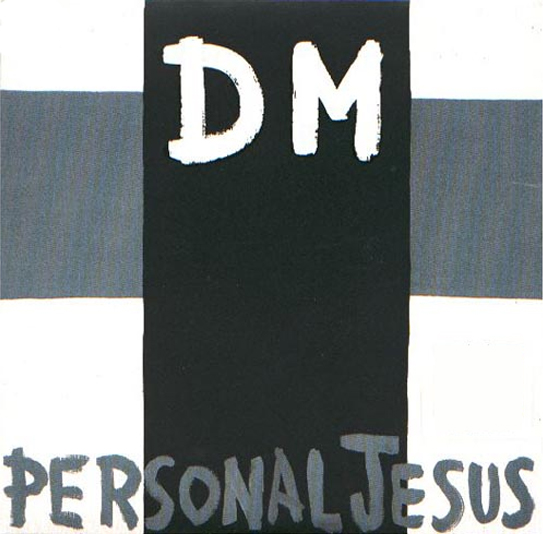
Depeche Mode kicked off their most successful album of all times (Violator, 1990), with the single Personal Jesus, which was highly controversial by its name alone. The simple cross added to it, making DM the crucified. After a big breakthrough record (‘sub-brand’), releasing the first single without the b(r)and’s name on the cover showed attitude, confidence and promised innovation.
Ensure your brand identity stands out, is meaningful and relevant, but always keep it extremely simple to allow for easy application by brand adopters, employees, vendors and of course your groupies.
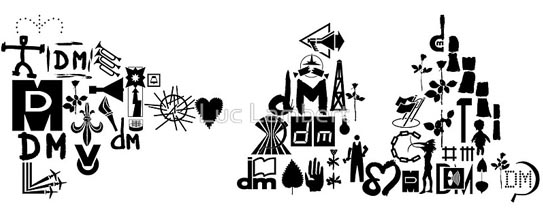
Over the years the band created variations of its b(r)and initials coupled with simple icons that allowed for versatility with stage projections and merchandise, but above all enabled fans to easily create art and avatars to turn into adopters of this particular time of the band’s journey. Above shows a collection of these icons as put together by fan Luce Lambert to form the DM initials of the band’s current record.
If you innovate through your brand marketing, people will notice, and that’s the first step to create a following. The more unique, the more interest it will generate and the more press your brand will receive in return. Yes, unique design will lead to sales.
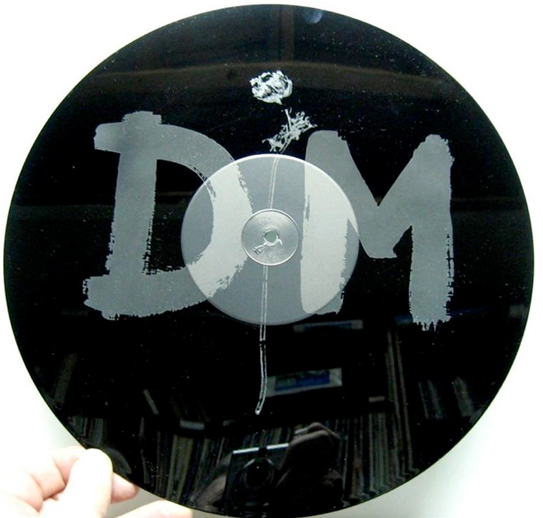
For a limited edition of the band’s mega hit ‘Enjoy the Silence‘, it featured a 15 minute remix of the song on one side while the b-side featured no music at all, but an etching of the band’s identity instead.
“Words are very unnecessary, they can only do harm,” is the chorus of the band’s biggest hit, which you may recognize. Music art relies on imagery and imagery alone. In a world of infographics, A.D.D. and information overload, your new brand should adopt that mantra and say less with more…imagery.
Nearly a given for any band leader, it also holds true for your brand launch. If you strategically infuse a brand character into your launch, it will instantly make your brand more likable. That persona could be the CEO (‘Richard Branson‘), a fictional character (‘Mr. Clean‘) or a spokesperson hire (‘The most interesting man in the world‘) that embodies what your brand stands for.
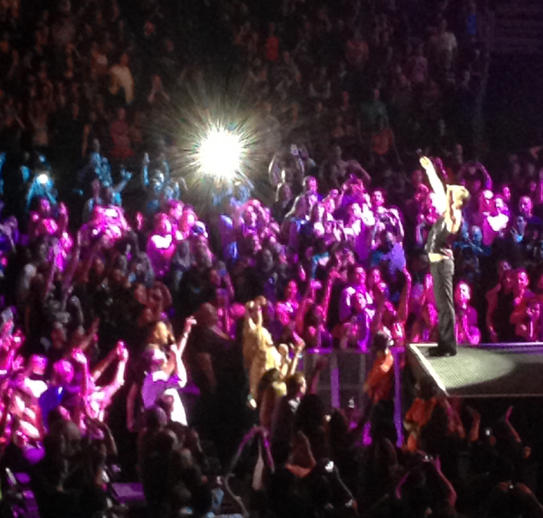
I took this photo of Depeche Mode’s lead singer, Dave Gahan last night at the Staples Center in Los Angeles. Gahan is working the stage and the female audience alike, and became a major driver in the b(r)and’s longevity.
5 b(r)and takeaways that I firmly believe will make your brand stronger at launch. Now look at your own small obsessions and find out why it makes you say ‘I am with the brand,’ then share your findings with us.
You created a robust business (or launch) plan and a solid brand platform. You hired a great branding firm to tackle the important task of creating a brand identity on time and on budget. What could possibly go wrong?
There’s one thing that can come between you and a winning brand identity: You.
Before you start your hate mails, think about it with me for a second. You have superior taste in art and design. You know your new service or product better than anyone else. You need to see it succeed. How could you possibly turn into a road block? Because of exactly these reasons you will want to create a brand identity that you will like. Colors that speak to you, shapes you like, a concept that resonates with you, fonts that feel current to you. That’s a whole lot of ‘you’ even though this is not at all about you, it’s about Julian, Rich and Adrienne. Your target personas. What you need to like is that your new brand identity will resonate and be liked by them.
Will you like the new brand identity design? You surely should. Does it matter if orange is your color and that you prefer sans serif typefaces? No, it does not. Nor does it matter what the Designer or Creative Director ‘likes’. What matters behind every creative decision is why it was made and how it will further improve adaptation by your customer. This is extremely difficult as an entrepreneur, or even CMO, to personally detach from, but it is what will make the brand ID a success for your audience and in turn for yourself.
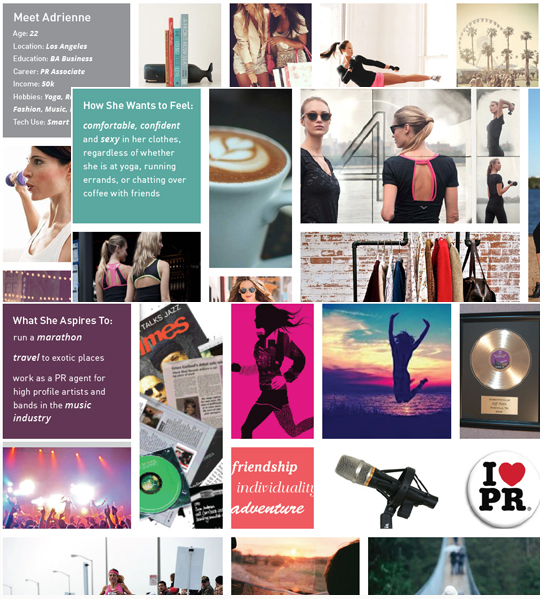
Meet Adrienne: Excerpts from a Brand Platform for a FINIEN client depicting Target Persona A
We advise our clients to dive deep into 3-5 target personas with us. We give them names, research and ‘listen’ to them. We encourage our more advantageous clients to create life size cardboard figures of them to place around the office. Next time you nod your head during a creative presentation and say ‘I like this, the colors are beautiful, the type is cool and the concept really resonates with me,’ take a step back and say ‘Adrienne would really like this, these colors disrupt her world just enough to stand out and I see her adopting the icon easily.’ You will like what you see say.
CATEGORIES: Blog Your Brand Launch: Identity
There are far more than 101 ways to use numbers in your brand name and end up with a name that no one but affiliates will easily remember. You fail before you even launch your product or service. Most numeric brand names see the light of day because someone is either lazy or tries to be overly smart. Both are not case studies for delivering a timeless and memorable brand name.
The lazies pick inspiration from immediate surroundings such as the corporation’s address, area code or adjacent freeway, in which case they hit rock bottom. Besides the missing message or depth in the name, needless to say this is a short term strategy until the company moves or expands. The more creative kind utilizes the area’s sights, attractions or even weather, as was the case with the highly respected Venice, CA based agency 72andSunny, who since expanded to Amsterdam, where it is more often 52andCloudy.
The overly smart create an arbitrary number based on the founders birthdays or other personal anecdotes or fun facts. 37signals (The company behind collaboration tools such as Basecamp) falls into this category as the name is derived from the 37 radio telescope signals identified by astronomer Paul Horowitz as potential messages from extraterrestrial intelligence (Source: Wiki). Those numbers (hence your brand name) mean nothing to the target audience, until they happen to read your About section on your web site, hoping to learn more about the reasoning behind the name (which is not the case with 37signals). Regardless, they won’t remember your secret number easily, or may I call it your brand pin code. In the worst case scenario your arbitrary number may be offensive to some religions, groups or even segments you may start catering to in the future.
Numbers in your name are risky and often forgettable, but there are ways to win the numbers game. Here are two rules to follow in order to get on the winning streak:
If your brand name will focus on a sole number, that very number needs to be significant to others. Nate Silver’s FiveThirtyEight comes to mind. The name is derived from the number of electors in the United States Electoral Office. His followers would either know, or want to adapt to the number quickly as it is tied to knowledge surrounding a topic they themselves are interested in. Since it is a niche blog for a niche audience, Nate can get away without attaching a word to the number. Even with this approach, be aware that there will be companies with the same name and that any sole number domain name will likely be taken and just as expensive to obtain as it will be to gain IP rights. 7-Eleven is a successful example of creating a distinct name by using a number while showcasing a unique consumer benefit (open 7 – 11, 7 days a week), which perfectly transitions to rule #2:
The number, or word needs a partner to add value and create purpose. This forms an Alphanumeric Brand Name. If you are able to connect a meaningful number to a meaningful word, such as Social123 (Easy as 1-2-3) or 99Designs (99 equals big variety), you create a story and build a strong value proposition. You will have the added benefit of obtaining IP rights and securing your domain name swiftly.
Now you can play by the numbers, but be aware that if you enter the numeric brand name game, it most often is a gamble!
CATEGORIES: Your Brand Launch: Naming

Fabian Geyrhalter is the Principal of FINIEN, creating clarity for brand transformations.
More Key branding lessons to save time and money while winning hearts and minds.
Key branding lessons to save time and money while winning hearts and minds.
How to turn any venture into an admired brand
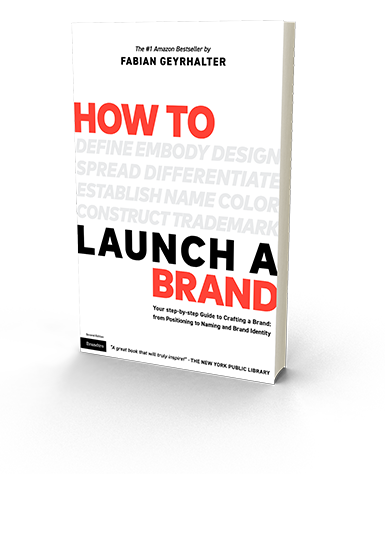
Your Comprehensive Guide to Launching a Brand: from Positioning to Naming and Brand Identity
 ADD A COMMENT